

OUR SERVICES
Hysteroscopy Procedures
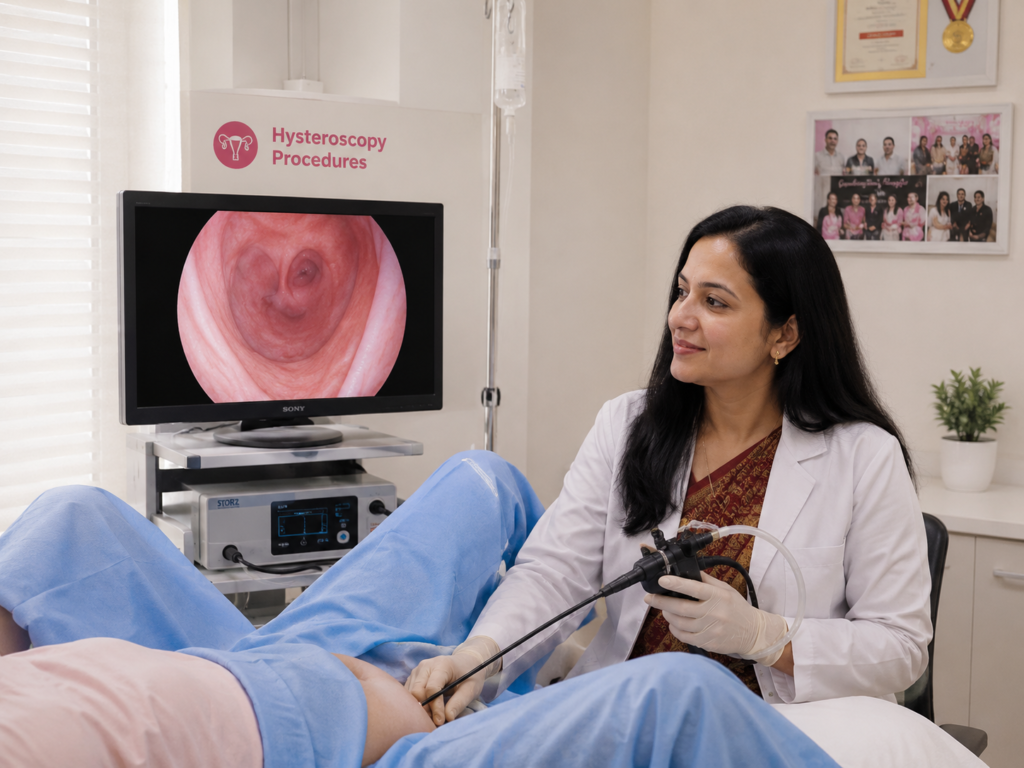
Hysteroscopy is a minimally invasive procedure used to examine the inside of the uterus and diagnose or treat various gynecological conditions. It helps identify abnormalities such as polyps, fibroids, adhesions and causes of abnormal bleeding, often without the need for major surgery.
Conditions We Treat

Abnormal Uterine Bleeding

Endometrial Polyps

Submucosal Fibroids

Uterine Adhesions (Asherman's Syndrome)

Postmenopausal Bleeding

Infertility Evaluation

Recurrent Miscarriages

Uterine Abnormalities

Symptoms & When to Consult
- Heavy menstrual bleeding
- Irregular bleeding
- Bleeding between periods
- Postmenopausal bleeding
- Difficulty conceiving
- Recurrent miscarriages
- Suspected uterine polyps
- Abnormal ultrasound findings
Our Care Process

1. Consultation & Evaluation
Detailed assessment of symptoms, medical history and previous investigations.

2. Diagnostic Assessment
Ultrasound and other investigations to determine the need for hysteroscopy.

3. Hysteroscopy Procedure
A thin camera is inserted through the cervix to examine the uterine cavity and perform treatment if required.

4. Regular & Follow-up
Post-procedure monitoring and follow-up to ensure optimal recovery and results.

Why Choose Us

15+ Years Experience

Advanced Diagnostic Techniques

Minimally Invasive Care

Safe & Confidential Treatment
Frequently Asked Questions
What is hysteroscopy?
Hysteroscopy is a procedure that allows a doctor to view the inside of the uterus using a thin, lighted instrument called a hysteroscope.
Is hysteroscopy painful?
Most women experience minimal discomfort. The level of discomfort depends on the type of procedure being performed.
Why is hysteroscopy performed?
It is used to diagnose and treat conditions such as abnormal bleeding, polyps, fibroids, infertility issues and recurrent miscarriages.
Is hysteroscopy a surgery?
Hysteroscopy is considered a minimally invasive procedure and often does not require large incisions
How long does recovery take?
Many patients resume normal activities within a day or two, depending on the complexity of the procedure.
Can hysteroscopy improve fertility outcomes?
In some cases, hysteroscopy can identify and treat uterine conditions that may affect fertility.