
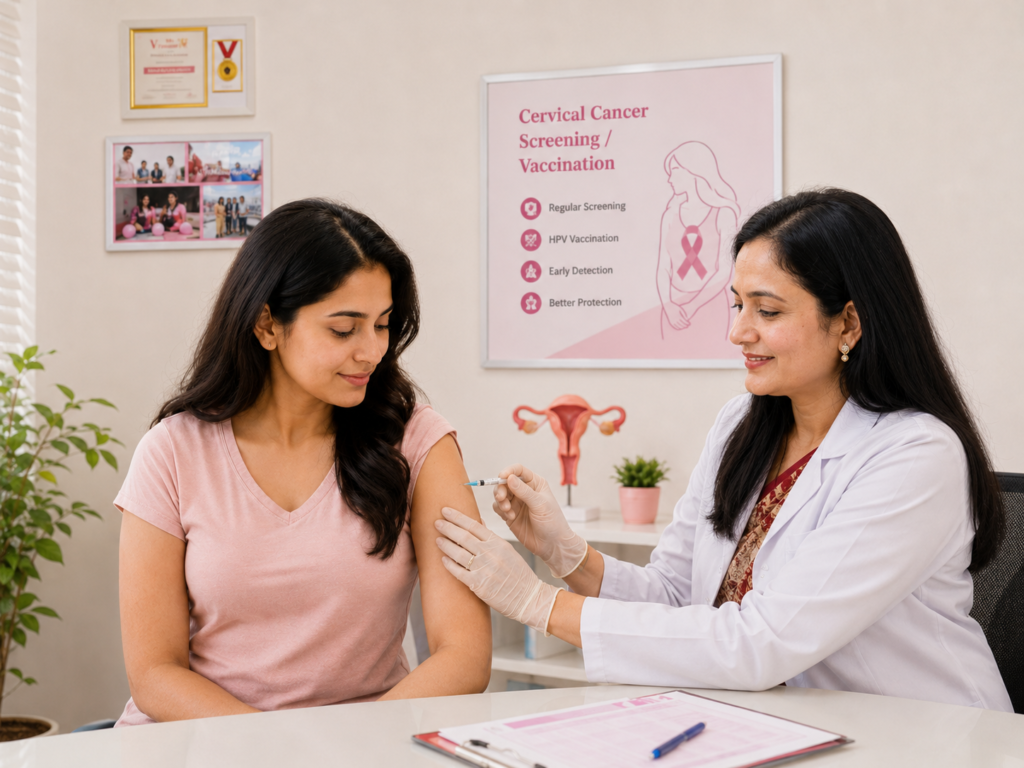
Cervical cancer is one of the most common cancers affecting women worldwide. It develops in the cells of the cervix, which is the lower part of the uterus connecting to the vagina. In many cases, cervical cancer develops slowly over several years, often beginning with abnormal changes in cervical cells known as precancerous lesions. Because these early changes may not cause noticeable symptoms, understanding Cervical Cancer Symptoms is essential for early detection and timely medical care.
Understanding Cervical Cancer Symptoms not only helps women recognize potential warning signs but also highlights the importance of preventive healthcare, routine gynecological examinations, and timely screening. Early diagnosis often allows for more treatment options and better long-term outcomes.
This comprehensive guide explains Cervical Cancer Symptoms, common risk factors, causes, screening methods, diagnosis, treatment options, and practical steps women can take to protect their cervical health.
Table of Contents
What Is Cervical Cancer?
Cervical cancer is a type of cancer that begins in the cervix.
The cervix forms the lower portion of the uterus and connects the uterus to the vagina.
Cervical cancer usually develops gradually as abnormal cervical cells undergo changes over several years.
Early identification of Cervical Cancer Symptoms improves the chances of successful treatment.
Why Early Detection Matters
Early-stage cervical cancer often causes few or no symptoms.
Routine screening helps identify abnormal cervical cells before cancer develops or during its earliest stages.
Early detection offers several benefits:
- More treatment options
- Higher treatment success rates
- Lower risk of cancer spreading
- Better long-term outcomes
- Improved quality of life
Recognizing Cervical Cancer Symptoms early encourages timely medical evaluation.
What Causes Cervical Cancer?
Most cervical cancers are linked to persistent infection with high-risk types of Human Papillomavirus (HPV).
HPV is a common virus transmitted through intimate skin-to-skin contact.
In many people, HPV infections resolve naturally.
However, persistent infection with high-risk HPV types may lead to abnormal cervical cell changes that can eventually become cancer.
Other contributing factors may include:
- Smoking
- Weakened immune system
- Long-term HPV infection
- Multiple full-term pregnancies
- Early sexual activity
- Long-term use of certain hormonal contraceptives
- Family history of cervical cancer
Understanding these risk factors complements awareness of Cervical Cancer Symptoms.
Cervical Cancer Symptoms
Early cervical cancer may not produce noticeable symptoms.
As the disease progresses, several warning signs may develop.
Abnormal Vaginal Bleeding
Abnormal vaginal bleeding is one of the most common Cervical Cancer Symptoms.
Bleeding may occur:
- Between menstrual periods
- After sexual intercourse
- After menopause
- After a pelvic examination
- During unusually heavy menstrual periods
Any unexpected vaginal bleeding should be evaluated by a healthcare professional.
Unusual Vaginal Discharge
Changes in vaginal discharge may occur as one of the Cervical Cancer Symptoms. The discharge may be:
- Watery
- Thick
- Blood-stained
- Foul-smelling
- Persistent
Although many gynecological conditions can cause vaginal discharge, persistent or unusual discharge should never be ignored. Recognizing these Cervical Cancer Symptoms and seeking timely medical evaluation can help identify the underlying cause and support early diagnosis and appropriate treatment if necessary.
Pelvic Pain
Persistent pelvic pain that is unrelated to normal menstrual cramps may indicate several gynecological conditions, including cervical cancer.
Pain may:
- Occur frequently
- Persist for weeks
- Increase gradually
- Affect daily activities
Pelvic pain is among the possible Cervical Cancer Symptoms that should not be ignored.
Pain During Sexual Intercourse
Some women experience discomfort or pain during sexual intercourse.
Pain may result from several gynecological conditions, including cervical abnormalities.
Persistent pain should be discussed with a healthcare provider.
Longer or Heavier Menstrual Periods
Some women notice changes in their menstrual cycle.
Possible changes include:
- Heavier bleeding
- Longer periods
- Irregular menstrual cycles
Although these changes may have many causes, persistent menstrual abnormalities warrant medical evaluation.
Fatigue
As cervical cancer progresses, some women may experience ongoing fatigue.
Fatigue may result from:
- Chronic blood loss
- Anemia
- Reduced overall health
Persistent unexplained tiredness should be medically evaluated.
Who Is at Risk?
Several factors increase the likelihood of developing cervical cancer.
Risk factors include:
Persistent HPV Infection
Persistent infection with high-risk HPV types is the most significant risk factor.
Smoking
Smoking increases the risk of cervical cell damage and cervical cancer.
Quitting smoking benefits overall reproductive health.
Weakened Immune System
Individuals with weakened immune function may have greater difficulty clearing HPV infections.
Examples include:
- HIV infection
- Certain immune disorders
- Immunosuppressive medications
Early Sexual Activity
Beginning sexual activity at a younger age increases the likelihood of HPV exposure over time.
Multiple Sexual Partners
Having multiple sexual partners increases the chance of HPV infection.
Family History
Although most cervical cancers are related to HPV infection, family history may also contribute to individual risk.
Importance of Regular Cervical Screening
Routine cervical screening plays a vital role in preventing cervical cancer.
Screening helps identify abnormal cervical cell changes before cancer develops.
Common screening methods include:
- Pap smear (Pap test)
- HPV testing
Women should follow their healthcare provider’s recommendations regarding screening frequency based on age, medical history, and individual risk factors.
Understanding Cervical Cancer Symptoms, recognizing early warning signs, and participating in regular cervical screening are essential steps toward protecting reproductive health, supporting early diagnosis, and improving long-term treatment outcomes.
Advanced Cervical Cancer Symptoms
While early cervical cancer may not cause noticeable symptoms, more advanced disease can affect nearby tissues and organs. Recognizing advanced Cervical Cancer Symptoms is important because prompt medical evaluation may improve treatment planning and outcomes.
Symptoms may become more noticeable as the cancer grows beyond the cervix.
Persistent Pelvic Pain
Pelvic pain that continues for several weeks or gradually becomes more severe should not be ignored.
The pain may:
- Be constant or intermittent
- Worsen during physical activity
- Occur independently of menstruation
- Affect daily activities
Persistent pelvic pain is one of the advanced Cervical Cancer Symptoms that requires medical assessment.
Lower Back Pain
Some women experience lower back pain when cervical cancer affects nearby tissues.
Although back pain has many possible causes, persistent pain accompanied by abnormal vaginal bleeding or discharge should be evaluated promptly.
Leg Pain or Swelling
Advanced cervical cancer may occasionally affect nearby lymph nodes or blood vessels.
Possible symptoms include:
- Swelling in one or both legs
- Persistent leg pain
- A feeling of heaviness in the legs
These symptoms require immediate medical evaluation.
Difficulty Urinating or Bowel Changes
As cervical cancer progresses, it may affect nearby organs.
Some women may notice:
- Pain while urinating
- Increased urinary frequency
- Blood in the urine
- Constipation
- Difficulty passing stools
These symptoms may also occur with many non-cancerous conditions, but they should always be assessed by a healthcare professional.
Unexplained Weight Loss
Unexpected weight loss without changes in diet or exercise may occur in advanced stages of many cancers, including cervical cancer.
Persistent weight loss should never be ignored.
When Should You See a Doctor?
Women should consult a healthcare provider if they experience persistent or unusual Cervical Cancer Symptoms, especially if symptoms continue for more than a few weeks.
Seek medical evaluation if you notice:
- Abnormal vaginal bleeding
- Bleeding after intercourse
- Bleeding after menopause
- Persistent unusual vaginal discharge
- Ongoing pelvic pain
- Pain during sexual intercourse
- Unexplained fatigue
- Unexplained weight loss
Early medical evaluation allows healthcare providers to identify the underlying cause and recommend appropriate treatment.
Diagnosis and Screening Tests
Several diagnostic tests help detect cervical abnormalities and confirm a diagnosis.
Pelvic Examination
A pelvic examination allows the healthcare provider to examine the cervix and surrounding reproductive organs for visible abnormalities.
Pap Smear (Pap Test)
A Pap smear is one of the most effective screening tests for detecting abnormal cervical cells before they develop into cancer.
Regular screening significantly reduces cervical cancer risk through early detection.
HPV Testing
HPV testing identifies high-risk Human Papillomavirus strains associated with cervical cancer.
HPV testing is often performed together with a Pap smear in eligible women.
Colposcopy
If screening tests show abnormal results, a colposcopy may be recommended.
During this procedure, the cervix is examined using a specialized magnifying instrument that provides a detailed view of cervical tissue.
Cervical Biopsy
A biopsy involves removing a small sample of cervical tissue for laboratory examination.
A biopsy confirms whether abnormal cells are cancerous or precancerous.
Imaging Tests
If cervical cancer is diagnosed, imaging studies may help determine whether the disease has spread.
These may include:
- MRI
- CT scan
- PET scan
- Chest X-ray
The choice of imaging depends on the individual’s clinical condition.
Stages of Cervical Cancer
Treatment planning depends on the stage of the disease.
Stage I
Cancer is limited to the cervix.
Early treatment often has excellent outcomes.
Stage II
Cancer has spread beyond the cervix but has not reached the pelvic wall or lower vagina.
Stage III
Cancer extends into the pelvic wall, lower vagina, or affects kidney function.
Stage IV
Cancer has spread to nearby organs or distant parts of the body.
Understanding the stage helps doctors recommend the most appropriate treatment.
Treatment Options
Treatment depends on several factors, including:
- Cancer stage
- Tumor size
- Overall health
- Age
- Reproductive goals
Common treatment options include:
Surgery
Surgery may be recommended for early-stage cervical cancer.
Procedures vary depending on the extent of disease.
Radiation Therapy
Radiation therapy uses high-energy radiation to destroy cancer cells.
It may be used alone or together with chemotherapy.
Chemotherapy
Chemotherapy uses medications to destroy cancer cells or slow their growth.
It is often combined with radiation therapy for advanced cervical cancer.
Targeted Therapy
Certain targeted medications specifically attack cancer cells while minimizing damage to healthy tissues.
These treatments are recommended in selected cases.
Immunotherapy
Some patients with advanced cervical cancer may benefit from immunotherapy, which helps the immune system recognize and attack cancer cells.
Treatment decisions are individualized based on medical evaluation.
Can Cervical Cancer Be Prevented?
Many cases of cervical cancer can be prevented through appropriate screening and preventive healthcare.
Important preventive measures include:
- HPV vaccination
- Routine cervical screening
- Early treatment of abnormal cervical cells
- Smoking cessation
- Safe sexual practices
Prevention remains one of the most effective strategies for reducing cervical cancer risk.
HPV Vaccination
HPV vaccination protects against several high-risk HPV types responsible for most cervical cancers.
Vaccination is most effective before exposure to HPV but may also provide benefits for eligible individuals later in life according to medical recommendations.
Lifestyle Changes That Support Cervical Health

Healthy lifestyle habits contribute to overall reproductive health.
Helpful practices include:
- Avoid smoking
- Eat a balanced diet
- Exercise regularly
- Maintain a healthy body weight
- Practice safe sexual behaviors
- Attend routine gynecological checkups
- Follow recommended cervical screening schedules
Understanding Cervical Cancer Symptoms, participating in regular screening, receiving HPV vaccination when appropriate, and adopting healthy lifestyle habits can significantly reduce the risk of cervical cancer while supporting long-term reproductive health and overall well-being.
Prevention Tips
Although cervical cancer cannot always be prevented, many cases can be avoided through regular screening, HPV vaccination, and healthy lifestyle choices. Understanding Cervical Cancer Symptoms and recognizing early warning signs can help women seek timely medical care before the disease progresses.
Get Regular Cervical Screening
Routine cervical screening is one of the most effective ways to detect abnormal cervical cells before they develop into cancer.
Recommended screening may include:
- Pap smear (Pap test)
- HPV test
- Regular gynecological examinations
Follow your healthcare provider’s recommendations regarding screening intervals.
Consider HPV Vaccination
The Human Papillomavirus (HPV) vaccine protects against several high-risk HPV types associated with cervical cancer.
Vaccination is most effective when administered before HPV exposure but may also benefit eligible individuals according to current medical guidelines.
Practice Safe Sexual Health
Since HPV is primarily transmitted through intimate skin-to-skin contact, practicing safer sexual behaviors may reduce the risk of HPV infection.
Healthy practices include:
- Using barrier protection
- Limiting exposure to sexually transmitted infections
- Attending regular health checkups
Avoid Smoking
Smoking increases the risk of cervical cell changes and cervical cancer.
Quitting smoking supports:
- Cervical health
- Immune function
- Overall reproductive health
Maintain a Healthy Lifestyle
General health supports a healthy immune system.
Healthy habits include:
- Eating a balanced diet
- Regular exercise
- Adequate sleep
- Stress management
- Maintaining a healthy weight
These habits contribute to overall well-being.
Common Myths About Cervical Cancer
Misconceptions often delay diagnosis and treatment.
Myth 1: Cervical Cancer Always Causes Symptoms Early
Fact: Early cervical cancer often causes no noticeable symptoms. This is why routine screening is extremely important.
Myth 2: Only Older Women Develop Cervical Cancer
Fact: Cervical cancer can occur in adults of different age groups. Regular screening recommendations vary based on age and medical history.
Myth 3: HPV Infection Always Leads to Cervical Cancer
Fact: Most HPV infections resolve naturally without causing cancer. Persistent infection with certain high-risk HPV types increases the risk.
Myth 4: A Normal Pap Smear Means Screening Is No Longer Needed
Fact: Regular screening should continue according to your healthcare provider’s recommendations even after normal results.
Myth 5: Cervical Cancer Cannot Be Prevented
Fact: Many cases can be prevented through HPV vaccination, routine screening, early treatment of abnormal cervical changes, and awareness of Cervical Cancer Symptoms.
Frequently Asked Questions
What are the earliest Cervical Cancer Symptoms?
Early Cervical Cancer Symptoms may include:
- Abnormal vaginal bleeding
- Bleeding after intercourse
- Unusual vaginal discharge
- Pelvic pain
- Pain during sexual intercourse
Some women may experience no symptoms in the earliest stages.
What causes cervical cancer?
Persistent infection with high-risk Human Papillomavirus (HPV) is the primary cause of most cervical cancers.
Can cervical cancer be detected before symptoms appear?
Yes.
Routine cervical screening with Pap smears and HPV testing can detect abnormal cervical cell changes before noticeable Cervical Cancer Symptoms develop.
Is cervical cancer treatable?
Yes.
When diagnosed early, cervical cancer often has very good treatment outcomes.
Treatment depends on the stage and individual clinical condition.
How often should women undergo cervical screening?
Screening recommendations vary based on:
- Age
- Medical history
- Previous screening results
- National healthcare guidelines
A healthcare provider can recommend an appropriate screening schedule.
Does HPV vaccination eliminate all cervical cancer risk?
HPV vaccination significantly reduces the risk but does not eliminate it completely.
Regular cervical screening remains important even after vaccination.
Should I see a doctor if I notice abnormal vaginal bleeding?
Yes.
Persistent abnormal bleeding or other Cervical Cancer Symptoms should always be evaluated by a qualified healthcare professional.
Can healthy lifestyle habits reduce cervical cancer risk?
Yes.
Healthy habits such as avoiding smoking, attending routine gynecological checkups, maintaining a healthy immune system, and following recommended screening schedules contribute to cervical health.
Final Thoughts
Cervical cancer often develops gradually, providing valuable opportunities for prevention and early detection through regular screening and timely medical care. Because early stages may produce few or no symptoms, understanding Cervical Cancer Symptoms is essential for recognizing warning signs and seeking prompt evaluation.
Advances in HPV vaccination, cervical screening, and modern cancer treatments have greatly improved prevention and survival rates. Staying informed and maintaining regular healthcare visits empowers women to protect their reproductive health and overall well-being.
Conclusion
Cervical cancer is one of the most preventable forms of cancer when detected early through regular screening and appropriate preventive care. Understanding Cervical Cancer Symptoms enables women to recognize abnormal vaginal bleeding, unusual discharge, pelvic pain, pain during intercourse, and other warning signs that should never be ignored. Although these symptoms may also be caused by non-cancerous conditions, prompt medical evaluation is essential for an accurate diagnosis.
Routine Pap smears, HPV testing, HPV vaccination, healthy lifestyle habits, and regular gynecological examinations play a crucial role in reducing the risk of cervical cancer and improving long-term outcomes. Early diagnosis offers more treatment options and significantly increases the likelihood of successful treatment.
By staying informed about Cervical Cancer Symptoms, following recommended screening guidelines, and seeking medical attention whenever unusual symptoms occur, women can take proactive steps toward protecting their cervical health, preserving their overall well-being, and improving their quality of life.
Contact Information

Dr. Jasleen Kaur Malhotra
Gynaecologist, Obstetrician & Infertility Specialist
📍 Address: Clinic No. 56A, Behind Main Market, Sector 6, Dwarka, New Delhi – 110075
📞 Phone: +91-99105-52246
🌐 Website: gynaefemmewellnessdwarka.com