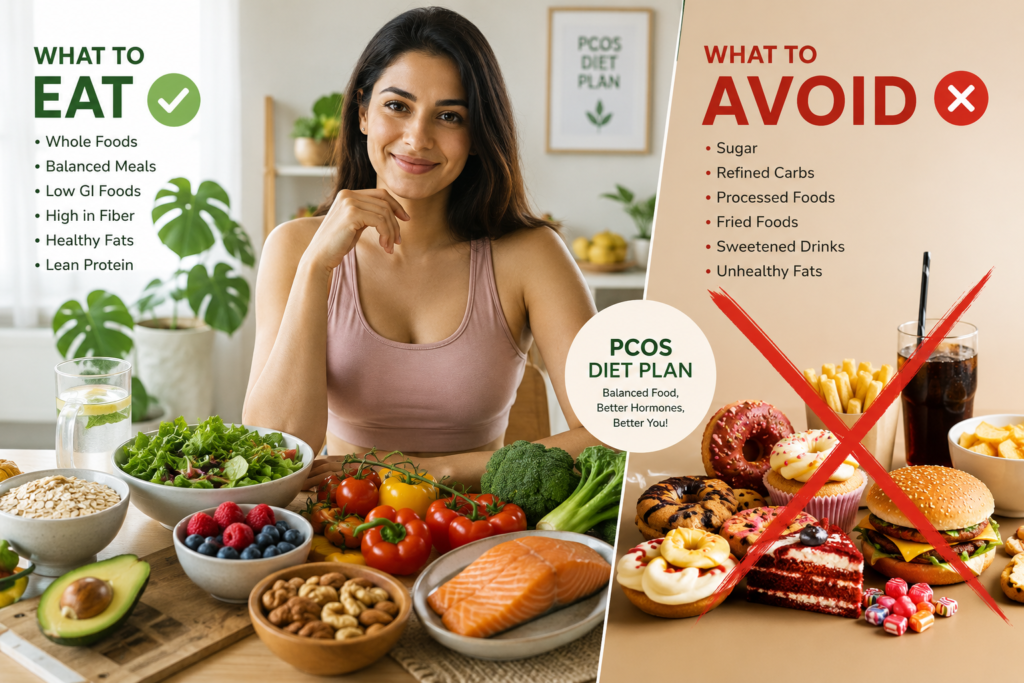
Polycystic Ovary Syndrome (PCOS) is one of the most common hormonal disorders affecting women of reproductive age. It can impact menstrual cycles, fertility, weight management, insulin sensitivity, and overall health. While medications and medical treatments may help manage symptoms, nutrition plays a critical role in controlling PCOS effectively.
A well-balanced PCOS Diet Plan: What to Eat and Avoid can help regulate hormones, improve insulin resistance, support healthy weight management, reduce inflammation, and promote better reproductive health. Many women with PCOS struggle with symptoms such as irregular periods, acne, excessive hair growth, fatigue, and difficulty losing weight. However, making smart dietary choices can significantly improve these symptoms over time.
This comprehensive guide on PCOS Diet Plan: What to Eat and Avoid explains how nutrition affects PCOS, the best foods to eat, foods to avoid, meal planning tips, and practical strategies to support hormonal balance naturally.
Table of Contents
Understanding the Link Between Diet and PCOS
PCOS is closely linked with insulin resistance. Insulin is a hormone responsible for regulating blood sugar levels. When the body becomes resistant to insulin, it produces more insulin to compensate.
Higher insulin levels can contribute to:
- Increased androgen production
- Weight gain
- Difficulty losing weight
- Irregular periods
- Fertility challenges
- Increased cravings
Following a structured PCOS Diet Plan: What to Eat and Avoid can help improve insulin sensitivity and reduce the severity of these symptoms.
Key Goals of a PCOS-Friendly Diet
A successful PCOS diet focuses on:
Balancing Blood Sugar Levels
Stable blood sugar helps reduce insulin spikes and hormonal imbalances.
Supporting Weight Management
Even a small reduction in body weight can improve PCOS symptoms.
Reducing Inflammation
Many women with PCOS experience chronic low-grade inflammation.
Improving Hormonal Balance
The right foods help regulate insulin and androgen levels.
Enhancing Fertility
Proper nutrition supports reproductive health and ovulation.
These goals form the foundation of an effective PCOS Diet Plan: What to Eat and Avoid.
What to Eat in a PCOS Diet
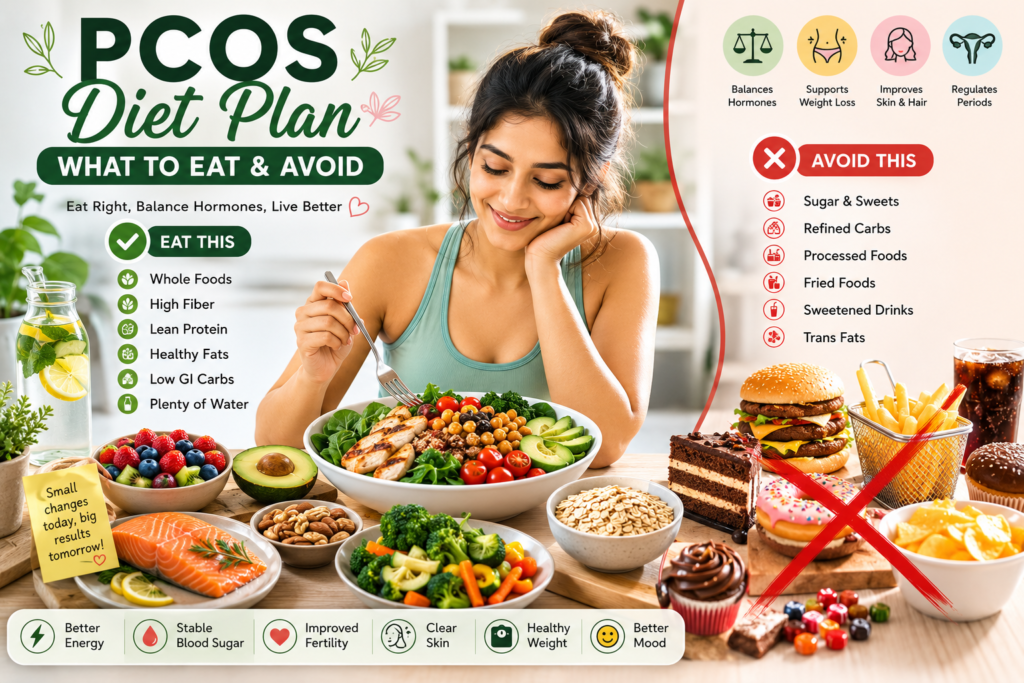
High-Fiber Foods
Fiber slows digestion and helps prevent blood sugar spikes.
Good options include:
- Oats
- Brown rice
- Quinoa
- Whole wheat products
- Lentils
- Beans
- Chickpeas
Fiber-rich foods also improve satiety and support weight management.
Leafy Green Vegetables
Green vegetables are rich in vitamins, minerals, antioxidants, and fiber.
Examples include:
- Spinach
- Kale
- Fenugreek leaves
- Mustard greens
- Broccoli
These vegetables are essential components of a healthy PCOS Diet Plan: What to Eat and Avoid because they help reduce inflammation and support hormonal health.
Lean Protein Sources
Protein helps maintain stable blood sugar levels and promotes fullness.
Recommended options:
- Eggs
- Chicken breast
- Fish
- Turkey
- Tofu
- Paneer
- Greek yogurt
Protein should be included in every meal to improve insulin sensitivity.
Healthy Fats
Healthy fats support hormone production and reduce inflammation.
Good sources include:
- Avocados
- Nuts
- Seeds
- Olive oil
- Flaxseeds
- Chia seeds
- Walnuts
Omega-3 fatty acids are particularly beneficial for women with PCOS.
Low Glycemic Index Fruits
Not all fruits affect blood sugar equally.
Best choices include:
- Apples
- Pears
- Berries
- Oranges
- Guava
- Kiwi
These fruits provide nutrients without causing major blood sugar fluctuations.
Anti-Inflammatory Foods
Chronic inflammation is often associated with PCOS.
Foods that help fight inflammation include:
- Turmeric
- Ginger
- Green tea
- Fatty fish
- Berries
- Nuts
Adding these foods regularly can strengthen the effectiveness of a PCOS Diet Plan: What to Eat and Avoid.
Fermented Foods
Gut health plays an important role in hormone regulation.
Examples include:
- Yogurt
- Kefir
- Kimchi
- Sauerkraut
Healthy gut bacteria may support metabolic and hormonal health.
Importance of Protein in PCOS Management
Protein is one of the most important nutrients for women with PCOS.
Benefits include:
- Reduced cravings
- Better blood sugar control
- Improved muscle maintenance
- Enhanced satiety
Aim to include protein in breakfast, lunch, dinner, and snacks.
Examples:
- Eggs with vegetables
- Greek yogurt with berries
- Grilled chicken salad
- Paneer and vegetable stir-fry
A protein-rich diet complements the goals of a PCOS Diet Plan: What to Eat and Avoid.
Best Breakfast Options for PCOS
Breakfast can influence blood sugar levels throughout the day.
Healthy breakfast ideas:
Vegetable Omelet
Rich in protein and nutrients.
Oatmeal with Nuts
Provides fiber and healthy fats.
Greek Yogurt Bowl
Add berries and chia seeds.
Moong Dal Chilla
High in protein and fiber.
Smoothie Bowl
Blend spinach, berries, protein, and seeds.
Choosing balanced breakfasts helps support the objectives of a PCOS Diet Plan: What to Eat and Avoid.
Hydration and PCOS
Water intake is often overlooked.
Benefits of staying hydrated:
- Supports metabolism
- Reduces bloating
- Improves digestion
- Enhances energy levels
Aim for 2–3 liters of water daily.
Healthy beverage options:
- Water
- Herbal tea
- Green tea
- Lemon water
Avoid sugary beverages whenever possible.
Foods to Avoid in a PCOS Diet
Understanding what foods to limit is just as important as knowing what to eat. A successful PCOS Diet Plan: What to Eat and Avoid focuses on reducing foods that worsen insulin resistance, inflammation, and hormonal imbalances.
Sugary Foods and Beverages
Sugar is one of the biggest dietary concerns for women with PCOS.
Foods and drinks to avoid include:
- Soft drinks
- Energy drinks
- Sweetened coffee beverages
- Candy
- Cakes
- Cookies
- Pastries
- Ice cream
Replacing sugary snacks with healthier alternatives can significantly improve the effectiveness of a PCOS Diet Plan: What to Eat and Avoid.
Refined Carbohydrates
Refined carbohydrates are quickly digested and can cause blood sugar fluctuations.
Examples include:
- White bread
- White rice
- White pasta
- Processed cereals
- Bakery products
Highly Processed Foods
Processed foods typically contain unhealthy fats, excess sodium, preservatives, and added sugars.
Examples include:
- Packaged snacks
- Chips
- Instant noodles
- Frozen meals
- Processed meats
Fried Foods
Deep-fried foods contain unhealthy fats that may increase inflammation and negatively impact heart health.
Examples include:
- French fries
- Fried chicken
- Fried snacks
- Fast food items
Limiting these foods is an important part of any PCOS Diet Plan: What to Eat and Avoid.
Excessive Dairy Consumption
Some women with PCOS may notice symptom improvement when reducing high-fat dairy products.
Foods to monitor include:
- Full-fat milk
- Cream
- Processed cheese
- Sweetened yogurt
Trans Fats
Trans fats are known to increase inflammation and insulin resistance.
Common sources include:
- Margarine
- Commercial baked goods
- Packaged desserts
- Certain fast foods
Why Sugar Is a Major Concern for PCOS
Many women with PCOS struggle with insulin resistance, making sugar management extremely important.
When high-sugar foods are consumed:
- Blood sugar rises rapidly.
- The body releases insulin.
- Insulin levels remain elevated.
- Excess insulin stimulates androgen production.
- PCOS symptoms worsen.
Reducing sugar intake is one of the most effective strategies within a PCOS Diet Plan: What to Eat and Avoid.
The Importance of Balanced Meals
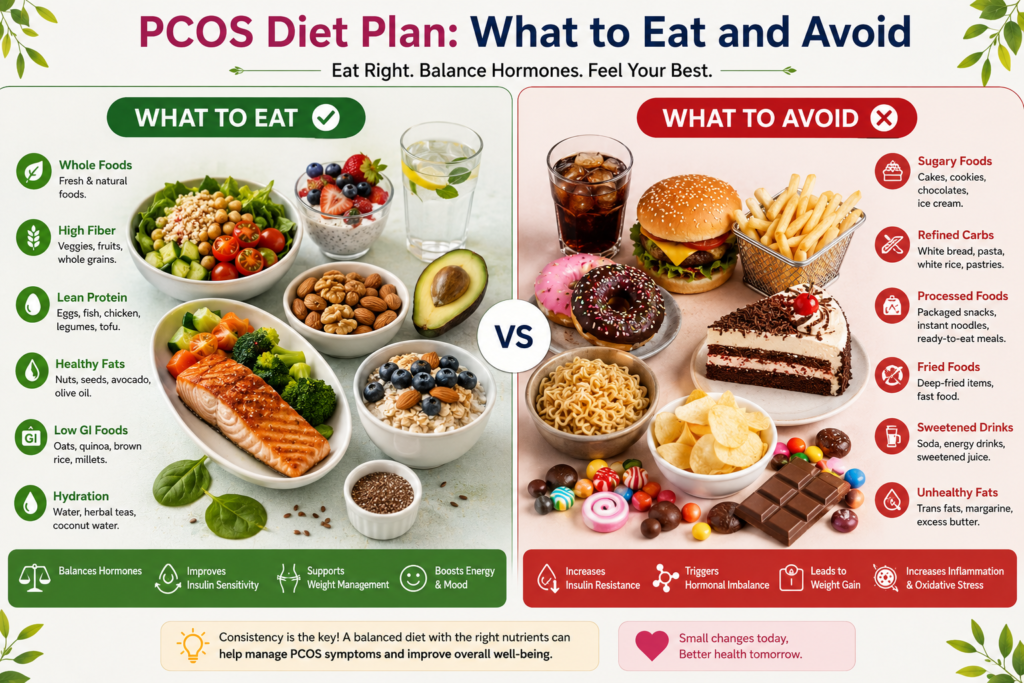
A balanced plate can help stabilize blood sugar levels and improve satiety.
Ideal Meal Composition
Half the Plate
Non-starchy vegetables such as:
- Spinach
- Broccoli
- Cucumber
- Bell peppers
One-Quarter of the Plate
Lean protein sources:
- Chicken
- Fish
- Eggs
- Tofu
- Paneer
One-Quarter of the Plate
Complex carbohydrates:
- Brown rice
- Quinoa
- Sweet potatoes
- Whole grains
This structure helps support the goals of a PCOS Diet Plan: What to Eat and Avoid while providing essential nutrients.
Smart Weight Loss Strategies for PCOS
Prioritize Protein
Protein helps reduce hunger and supports muscle maintenance.
Increase Fiber Intake
Fiber slows digestion and improves satiety.
Exercise Regularly
Aim for at least 150 minutes of moderate physical activity per week.
Improve Sleep Quality
Poor sleep can worsen insulin resistance and cravings.
These strategies complement a healthy PCOS Diet Plan: What to Eat and Avoid and improve overall health.
One-Day Sample PCOS Meal Plan
Early Morning
- Warm water with lemon
- A few soaked almonds
Breakfast
- Vegetable omelet
- One slice whole-grain toast
- Green tea
Mid-Morning Snack
- Apple
- Handful of walnuts
Lunch
- Grilled chicken or paneer
- Brown rice
- Mixed vegetable salad
Evening Snack
- Greek yogurt
- Chia seeds
Dinner
- Lentil soup
- Stir-fried vegetables
- Small portion of quinoa
Before Bed
- Herbal tea
This meal plan aligns well with the principles of a PCOS Diet Plan: What to Eat and Avoid.
Indian PCOS Diet Plan
Indian foods can be highly nutritious when prepared thoughtfully.
Breakfast Options
- Moong dal chilla
- Vegetable oats
- Besan cheela
- Vegetable upma
Lunch Options
- Roti made from multigrain flour
- Dal
- Vegetable sabzi
- Salad
Dinner Options
- Grilled paneer
- Mixed vegetables
- Millet roti
Healthy Snacks
- Roasted chana
- Nuts
- Seeds
- Fresh fruits
Traditional Indian diets can work exceptionally well within a PCOS Diet Plan: What to Eat and Avoid when refined carbohydrates and added sugars are minimized.
Best Supplements Often Recommended for PCOS
Always consult a healthcare professional before taking supplements.
Commonly recommended options include:
- Vitamin D
- Omega-3 fatty acids
- Magnesium
- Inositol
- Zinc
Common Diet Mistakes Women with PCOS Make
Many women unknowingly follow habits that worsen symptoms.
Skipping Meals
Can lead to overeating later.
Following Crash Diets
Often unsustainable and may slow metabolism.
Avoiding All Carbohydrates
The focus should be on choosing better carbohydrates rather than eliminating them completely.
Not Eating Enough Protein
Protein helps stabilize blood sugar and reduce cravings.
Ignoring Hydration
Water plays a vital role in overall health and metabolism.
Avoiding these mistakes can make a PCOS Diet Plan: What to Eat and Avoid more effective and sustainable.
Foods to Avoid in a PCOS Diet
Understanding what foods to limit is just as important as knowing what to eat. A successful PCOS Diet Plan: What to Eat and Avoid focuses on reducing foods that worsen insulin resistance, inflammation, and hormonal imbalances.
Sugary Foods and Beverages
Sugar is one of the biggest dietary concerns for women with PCOS.
Foods and drinks to avoid include:
- Soft drinks
- Energy drinks
- Sweetened coffee beverages
- Candy
- Cakes
- Cookies
- Pastries
- Ice cream
Replacing sugary snacks with healthier alternatives can significantly improve the effectiveness of a PCOS Diet Plan: What to Eat and Avoid.
Refined Carbohydrates
Refined carbohydrates are quickly digested and can cause blood sugar fluctuations.
Examples include:
- White bread
- White rice
- White pasta
- Processed cereals
- Bakery products
Highly Processed Foods
Processed foods typically contain unhealthy fats, excess sodium, preservatives, and added sugars.
Examples include:
- Packaged snacks
- Chips
- Instant noodles
- Frozen meals
- Processed meats
Fried Foods
Deep-fried foods contain unhealthy fats that may increase inflammation and negatively impact heart health.
Examples include:
- French fries
- Fried chicken
- Fried snacks
- Fast food items
Limiting these foods is an important part of any PCOS Diet Plan: What to Eat and Avoid.
Excessive Dairy Consumption
Some women with PCOS may notice symptom improvement when reducing high-fat dairy products.
Foods to monitor include:
- Full-fat milk
- Cream
- Processed cheese
- Sweetened yogurt
Trans Fats
Trans fats are known to increase inflammation and insulin resistance.
Common sources include:
- Margarine
- Commercial baked goods
- Packaged desserts
- Certain fast foods
Why Sugar Is a Major Concern for PCOS
Many women with PCOS struggle with insulin resistance, making sugar management extremely important.
When high-sugar foods are consumed:
- Blood sugar rises rapidly.
- The body releases insulin.
- Insulin levels remain elevated.
- Excess insulin stimulates androgen production.
- PCOS symptoms worsen.
Symptoms linked to insulin resistance include:
- Weight gain
- Fatigue
- Increased hunger
- Cravings
- Irregular periods
Reducing sugar intake is one of the most effective strategies within a PCOS Diet Plan: What to Eat and Avoid.
The Importance of Balanced Meals
A balanced plate can help stabilize blood sugar levels and improve satiety.
Ideal Meal Composition
Half the Plate
Non-starchy vegetables such as:
- Spinach
- Broccoli
- Cucumber
- Bell peppers
One-Quarter of the Plate
Lean protein sources:
- Chicken
- Fish
- Eggs
- Tofu
- Paneer
One-Quarter of the Plate
Complex carbohydrates:
- Brown rice
- Quinoa
- Sweet potatoes
- Whole grains
This structure helps support the goals of a PCOS Diet Plan: What to Eat and Avoid while providing essential nutrients.
Can Weight Loss Improve PCOS?
Research suggests that losing just 5–10% of body weight may help:
- Improve insulin sensitivity
- Regulate menstrual cycles
- Support ovulation
- Reduce androgen levels
- Improve fertility outcomes
Smart Weight Loss Strategies for PCOS
Prioritize Protein
Protein helps reduce hunger and supports muscle maintenance.
Exercise Regularly
Aim for at least 150 minutes of moderate physical activity per week.
Improve Sleep Quality
Poor sleep can worsen insulin resistance and cravings.
Manage Stress
Chronic stress affects hormones and can contribute to weight gain.
These strategies complement a healthy PCOS Diet Plan: What to Eat and Avoid and improve overall health.
One-Day Sample PCOS Meal Plan
Early Morning
- Warm water with lemon
- A few soaked almonds
Breakfast
- Vegetable omelet
- One slice whole-grain toast
- Green tea
Mid-Morning Snack
- Apple
- Handful of walnuts
Lunch
- Grilled chicken or paneer
- Brown rice
- Mixed vegetable salad
Evening Snack
- Greek yogurt
- Chia seeds
Dinner
- Lentil soup
- Stir-fried vegetables
- Small portion of quinoa
Before Bed
- Herbal tea
This meal plan aligns well with the principles of a PCOS Diet Plan: What to Eat and Avoid.
Indian PCOS Diet Plan
Indian foods can be highly nutritious when prepared thoughtfully.
Breakfast Options
- Moong dal chilla
- Vegetable oats
- Besan cheela
- Vegetable upma
Lunch Options
- Roti made from multigrain flour
- Dal
- Vegetable sabzi
- Salad
Dinner Options
- Grilled paneer
- Mixed vegetables
- Millet roti
Healthy Snacks
- Roasted chana
- Nuts
- Seeds
- Fresh fruits
Traditional Indian diets can work exceptionally well within a PCOS Diet Plan: What to Eat and Avoid when refined carbohydrates and added sugars are minimized.
Best Supplements Often Recommended for PCOS
Always consult a healthcare professional before taking supplements.
Commonly recommended options include:
- Vitamin D
- Omega-3 fatty acids
- Magnesium
- Inositol
- Zinc
Common Diet Mistakes Women with PCOS Make
Many women unknowingly follow habits that worsen symptoms.
Skipping Meals
Can lead to overeating later.
Following Crash Diets
Often unsustainable and may slow metabolism.
Avoiding All Carbohydrates
The focus should be on choosing better carbohydrates rather than eliminating them completely.
Not Eating Enough Protein
Protein helps stabilize blood sugar and reduce cravings.
Ignoring Hydration
Water plays a vital role in overall health and metabolism.
Avoiding these mistakes can make a PCOS Diet Plan: What to Eat and Avoid more effective and sustainable.
Contact Information

Dr. Jasleen Kaur Malhotra
Gynaecologist, Obstetrician & Infertility Specialist
📍 Address: Clinic No. 56A, Behind Main Market, Sector 6, Dwarka, New Delhi – 110075
📞 Phone: +91-99105-52246
🌐 Website: gynaefemmewellnessdwarka.com