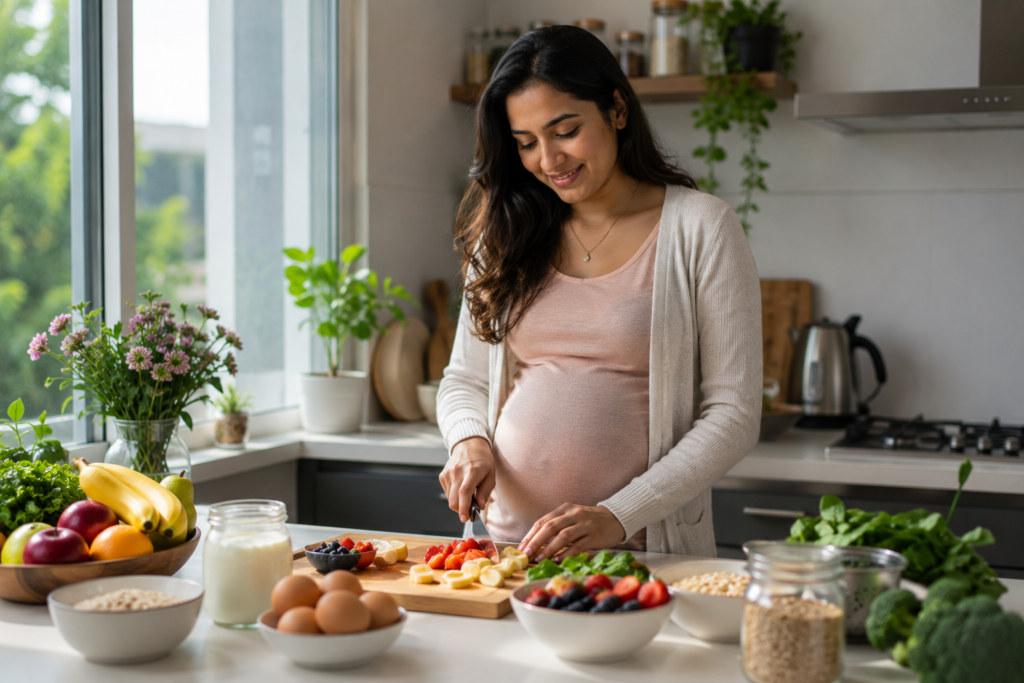
Pregnancy is a special phase that brings exciting changes to a woman’s body. During these months, nutrition becomes one of the most important factors that supports both the mother’s health and the baby’s growth. Every meal provides nutrients that help build organs, bones, muscles, and the brain. This is why choosing the right Foods to Eat During Pregnancy is more important than simply eating more.
Many expectant mothers receive different advice from family, friends, and social media. Some people encourage eating for two, while others recommend avoiding many foods without clear reasons. This overload of information often creates confusion about what should actually be included in a healthy pregnancy diet.
A balanced pregnancy diet is not about expensive ingredients or complicated meal plans. Instead, it focuses on nutrient-rich foods that provide essential vitamins, minerals, protein, healthy fats, fiber, and carbohydrates. These nutrients support healthy fetal development while helping mothers maintain their own energy levels throughout pregnancy.
Every trimester comes with unique nutritional needs. During the first trimester, nausea may make eating difficult, while the second and third trimesters require additional calories and nutrients to support rapid fetal growth. Choosing the right Foods to Eat During Pregnancy can also help reduce common concerns such as constipation, fatigue, leg cramps, and iron deficiency.
Healthy eating during pregnancy is also linked with better maternal health outcomes. Proper nutrition may support healthy weight gain, improve immunity, strengthen bones, and contribute to a healthier pregnancy overall.
The following guide explains what Foods to Eat During Pregnancy include, why they matter, and how they support both maternal wellness and healthy fetal development using practical, evidence-based information.
Table of Contents
What Is Foods to Eat During Pregnancy
The term Foods to Eat During Pregnancy refers to nutrient-rich foods that provide the vitamins, minerals, protein, healthy fats, fiber, and energy required during pregnancy. These foods help support fetal growth while maintaining the mother’s health throughout all three trimesters.
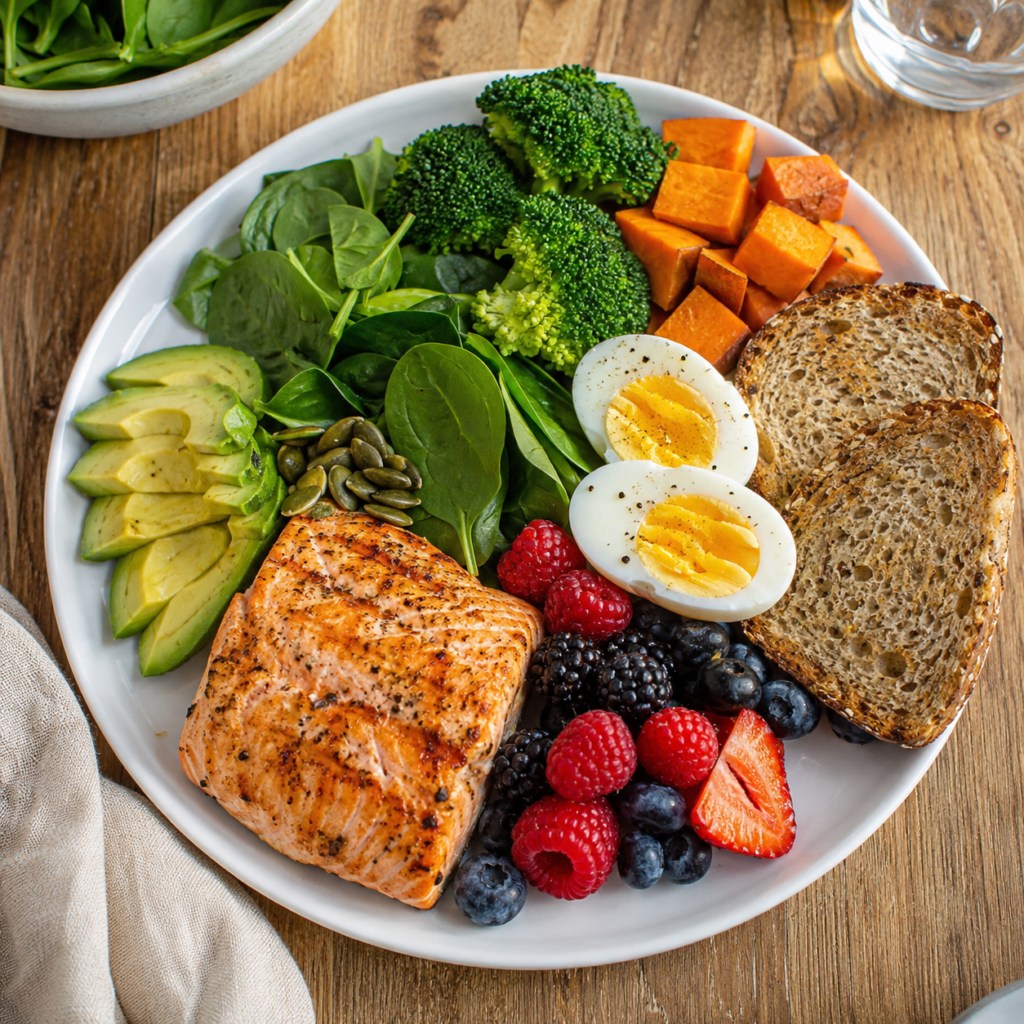
A healthy pregnancy diet usually includes:
- Fresh fruits
- Colorful vegetables
- Whole grains
- Lean proteins
- Dairy products or fortified alternatives
- Healthy fats
- Nuts and seeds
- Legumes
- Eggs
- Fish that are low in mercury
- Plenty of water
Healthcare professionals generally recommend variety because different foods provide different nutrients. Combining multiple food groups helps meet the increased nutritional demands of pregnancy.
Why Nutrition During Pregnancy Is So Important
Pregnancy increases the body’s nutritional requirements. Every major organ in the developing baby depends on nutrients supplied through the mother’s diet.
Eating the right Foods to Eat During Pregnancy may help support:
- Healthy fetal brain development
- Strong bones and teeth
- Muscle growth
- Healthy birth weight
- Placenta development
- Maternal energy levels
- Healthy blood production
- Immune function
- Digestive health
Good nutrition also prepares the mother’s body for childbirth and postpartum recovery.
Common Nutritional Challenges During Pregnancy
Many women experience changes that can affect their eating habits. Understanding these challenges makes it easier to choose suitable foods.
Morning Sickness
Nausea and vomiting are common during early pregnancy and may reduce appetite. Small, frequent meals with simple, nutritious foods often help maintain nutrient intake.
Food Cravings
Hormonal changes can increase cravings. While occasional treats are acceptable, balancing cravings with nutritious Foods to Eat During Pregnancy supports overall health.
Food Aversions
Some women suddenly dislike foods they previously enjoyed. Finding alternative sources of similar nutrients helps maintain a balanced diet.
Heartburn
As pregnancy progresses, heartburn becomes more common. Smaller meals and avoiding overly spicy or greasy foods may reduce discomfort.
Constipation
Hormonal changes and iron supplements may slow digestion. Fiber-rich foods, fruits, vegetables, whole grains, and adequate hydration can help support regular bowel movements.
Increased Nutrient Requirements
Pregnancy increases the need for several nutrients, including:
- Folate
- Iron
- Calcium
- Vitamin D
- Protein
- Iodine
- Omega-3 fatty acids
- Vitamin B12
- Zinc
Meeting these needs through a balanced diet, along with supplements recommended by a healthcare provider, supports healthy pregnancy outcomes.
Common Reasons Pregnant Women Need Better Food Choices
Several factors make healthy nutrition especially important during pregnancy.
Rapid Baby Growth
The developing baby grows quickly, requiring a continuous supply of nutrients from the mother’s diet.
Maternal Health Changes
Blood volume, metabolism, and hormone levels all change during pregnancy, increasing nutritional demands.
Higher Energy Needs
Although calorie needs do not double, they gradually increase during the second and third trimesters to support fetal growth.
Prevention of Nutrient Deficiencies
Choosing nutrient-rich Foods to Eat During Pregnancy helps reduce the risk of deficiencies that could affect both mother and baby.
Long-Term Health
Healthy eating habits during pregnancy may contribute to better maternal recovery after delivery and support the baby’s healthy development beyond birth.
12 Benefits of Eating the Right Foods to Eat During Pregnancy
1. Supports Healthy Brain Development
The baby’s brain begins developing early in pregnancy and continues growing throughout all three trimesters. Foods rich in omega-3 fatty acids, choline, iodine, and folate support normal brain and nervous system development. Including eggs, low-mercury fish, dairy products, and leafy vegetables regularly can help meet these nutritional needs.
2. Promotes Strong Bone Growth
Calcium, vitamin D, phosphorus, and magnesium work together to build healthy bones and teeth for the developing baby. Milk, yogurt, cheese, fortified plant-based alternatives, and green vegetables are excellent additions to the list of Foods to Eat During Pregnancy for maintaining bone health.
3. Helps Prevent Iron Deficiency
During pregnancy, the body produces more blood to support the growing baby. Iron-rich foods such as lean meat, lentils, spinach, beans, and fortified cereals help maintain healthy red blood cell production. Pairing these foods with vitamin C-rich fruits improves iron absorption.
4. Supports Healthy Birth Weight
A balanced intake of protein, healthy fats, whole grains, fruits, and vegetables provides the nutrients needed for steady fetal growth. Consistently choosing nutritious Foods to Eat During Pregnancy helps support healthy weight gain for both mother and baby without relying on empty calories.
5. Improves Maternal Energy Levels
Pregnancy often causes tiredness due to hormonal changes and increased energy demands. Complex carbohydrates, lean proteins, healthy fats, and iron-rich foods provide sustained energy throughout the day while helping reduce fatigue.
6. Strengthens the Immune System
Vitamins A, C, D, E, zinc, and selenium contribute to normal immune function. Colorful fruits, vegetables, nuts, seeds, dairy products, and lean proteins provide these important nutrients, helping mothers maintain overall wellness during pregnancy.
7. Supports Healthy Digestion
Digestive changes are common during pregnancy. Fiber-rich foods such as oats, whole grains, vegetables, legumes, fruits, and seeds help promote healthy digestion and may reduce constipation when combined with adequate water intake.
8. Encourages Healthy Muscle Development
Protein plays a major role in developing the baby’s muscles, organs, and tissues. Chicken, fish, eggs, dairy products, tofu, beans, and lentils are excellent Foods to Eat During Pregnancy that help meet increased protein requirements.
9. Helps Maintain Healthy Blood Sugar Levels
Choosing whole grains instead of refined carbohydrates provides slower, more stable energy. Brown rice, oats, quinoa, whole wheat bread, and legumes can help support balanced blood sugar levels as part of an overall healthy eating plan.
10. Supports Healthy Heart Function
Healthy fats from avocados, nuts, seeds, olive oil, and fatty fish contribute to cardiovascular health for both mother and baby. These foods also provide essential fatty acids needed during pregnancy.
11. Reduces the Risk of Nutrient Deficiencies
Eating a wide variety of nutrient-rich foods helps meet increased requirements for folate, iron, calcium, iodine, vitamin B12, and other essential nutrients. A diverse diet, along with prenatal supplements recommended by a healthcare provider, supports overall nutritional adequacy.
12. Prepares the Body for Recovery After Birth
Good nutrition during pregnancy helps maintain muscle strength, supports healthy tissues, and provides nutrient stores that can assist with postpartum recovery and breastfeeding. Building healthy eating habits before delivery benefits long-term maternal health.
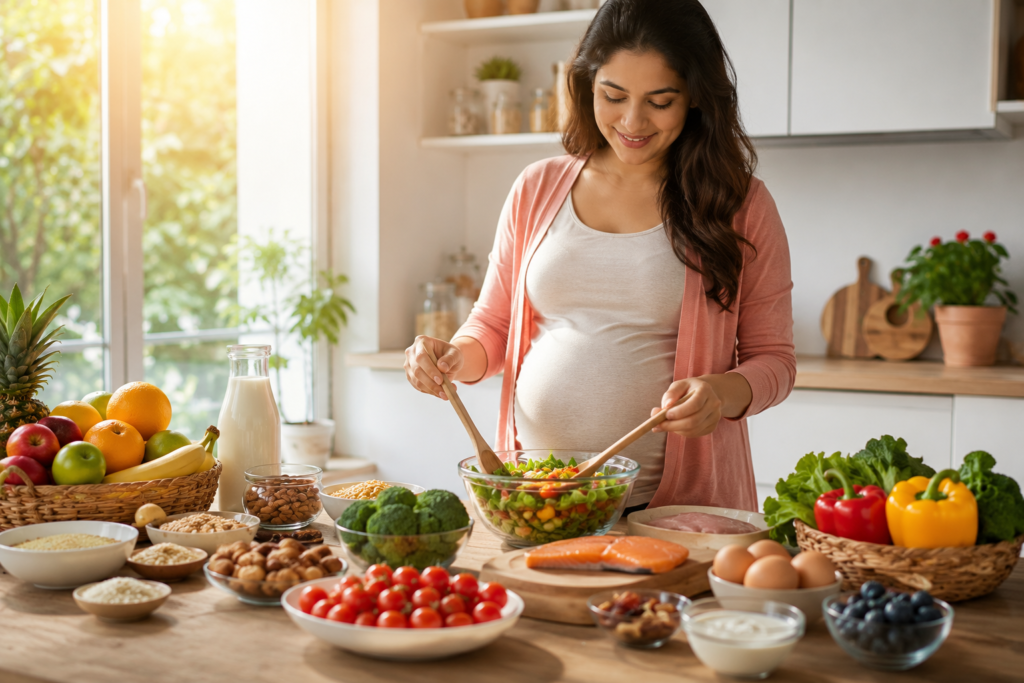
How Healthy Pregnancy Nutrition Works
The nutrients in Foods to Eat During Pregnancy work together to support both maternal health and fetal development.
Step 1: Eat Balanced Meals
Aim to include:
- Protein
- Whole grains
- Fruits
- Vegetables
- Healthy fats
at most meals to provide a broad range of nutrients.
Step 2: Increase Nutrient Intake Gradually
Calorie needs typically increase during the second and third trimesters. Focus on nutrient-dense snacks instead of foods high in added sugar or unhealthy fats.
Step 3: Stay Hydrated
Drink enough water throughout the day. Proper hydration supports digestion, circulation, amniotic fluid levels, and overall well-being.
Step 4: Take Prenatal Supplements
Prenatal vitamins help fill nutritional gaps but should complement, not replace, healthy eating. Follow your healthcare provider’s recommendations regarding folic acid, iron, vitamin D, and other supplements.
Step 5: Practice Food Safety
Wash fruits and vegetables thoroughly, cook meats completely, avoid unpasteurized dairy products, and choose low-mercury seafood to reduce the risk of foodborne illness.
Healthy Foods to Include During Pregnancy
Fruits
Fresh fruits provide:
- Vitamin C
- Potassium
- Fiber
- Antioxidants
Good options include oranges, berries, bananas, apples, mangoes, and kiwis.
Vegetables
Colorful vegetables supply essential vitamins and minerals.
Choose:
- Spinach
- Broccoli
- Carrots
- Sweet potatoes
- Bell peppers
- Tomatoes
Whole Grains
Healthy choices include:
- Brown rice
- Oats
- Whole wheat bread
- Quinoa
- Barley
These provide fiber and long-lasting energy.
Protein Sources
Excellent protein-rich Foods to Eat During Pregnancy include:
- Eggs
- Chicken
- Turkey
- Lentils
- Beans
- Chickpeas
- Tofu
- Fish low in mercury
Dairy Products
Milk, yogurt, and cheese provide calcium, protein, and vitamin B12. Choose pasteurized products whenever possible.
Healthy Fats
Include moderate amounts of:
- Avocados
- Almonds
- Walnuts
- Chia seeds
- Flaxseeds
- Olive oil
These support fetal brain development and maternal heart health.
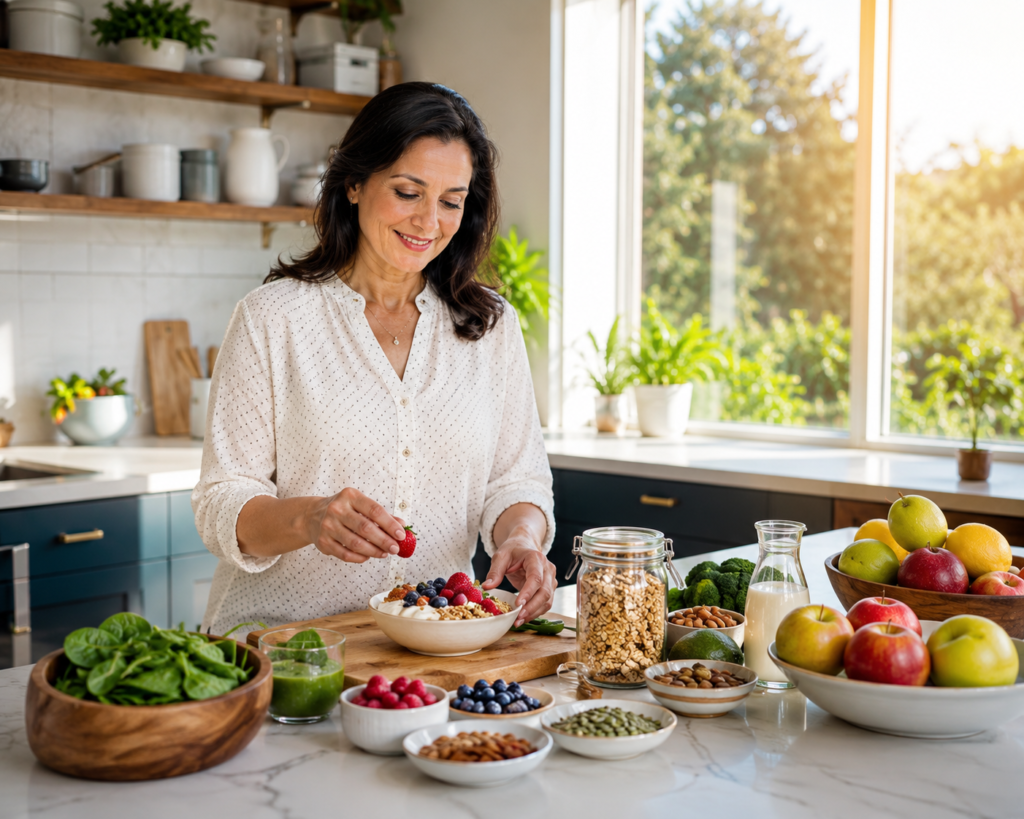
Daily Habits That Support Healthy Pregnancy Nutrition
Eat Smaller Meals More Often
Five to six smaller meals can help manage nausea, heartburn, and fluctuating hunger while maintaining steady energy levels.
Prioritize Breakfast
A nutritious breakfast containing protein, fiber, and healthy carbohydrates provides energy and helps meet daily nutrient requirements.
Keep Healthy Snacks Nearby
Portable snacks such as fruit, yogurt, nuts, roasted chickpeas, or whole-grain crackers make it easier to choose healthy Foods to Eat During Pregnancy between meals.
Drink Water Throughout the Day
Carry a reusable water bottle and sip regularly to stay hydrated. Proper fluid intake also supports digestion and may reduce constipation.
Limit Highly Processed Foods
Enjoy processed foods occasionally, but base most meals on fresh, minimally processed ingredients that provide greater nutritional value.
Follow Regular Prenatal Checkups
Routine prenatal visits help monitor your baby’s growth, assess your nutritional status, and identify any dietary adjustments recommended by your healthcare provider.
Common Myths About Foods to Eat During Pregnancy
Myth 1: You Need to Eat for Two
Fact:
Pregnancy increases nutritional needs, but it does not mean doubling your food intake. Focus on nutrient-dense Foods to Eat During Pregnancy rather than simply eating larger portions.
Myth 2: All Seafood Should Be Avoided
Fact:
Many types of fish are safe during pregnancy when they are low in mercury. Options such as salmon, sardines, and trout provide beneficial omega-3 fatty acids. Avoid high-mercury fish like shark, swordfish, king mackerel, and tilefish.
Myth 3: Coffee Must Be Completely Eliminated
Fact:
Moderate caffeine intake is generally considered acceptable during pregnancy. Follow your healthcare provider’s advice and stay within recommended daily limits.
Myth 4: Cravings Mean Your Body Needs That Food
Fact:
Cravings are common due to hormonal changes, but they do not always indicate a nutritional deficiency. A balanced diet remains the best approach.
Myth 5: Healthy Foods Cannot Be Tasty
Fact:
Nutritious meals can be flavorful and satisfying. Fresh herbs, spices, fruits, vegetables, lean proteins, and whole grains allow for delicious meals while providing essential nutrients.
Frequently Asked Questions
1. What are the best Foods to Eat During Pregnancy every day?
A balanced daily diet should include fruits, vegetables, whole grains, lean proteins, dairy or fortified alternatives, healthy fats, legumes, and plenty of water. Variety helps ensure you receive a broad range of nutrients needed for both maternal health and fetal development.
2. How much protein should I eat during pregnancy?
Protein requirements increase during pregnancy because it supports the baby’s muscles, organs, and tissues. Good protein sources include eggs, poultry, beans, lentils, fish low in mercury, dairy products, tofu, and nuts. Your healthcare provider can recommend the right amount based on your individual needs.
3. Which Foods to Eat During Pregnancy help reduce constipation?
Fiber-rich foods such as oats, whole grains, fruits, vegetables, beans, lentils, chia seeds, and flaxseeds can help support healthy digestion. Drinking enough water and staying physically active, if approved by your healthcare provider, may also improve bowel regularity.
4. Are prenatal vitamins enough without healthy eating?
No. Prenatal vitamins are designed to supplement a healthy diet, not replace it. Nutritious Foods to Eat During Pregnancy provide protein, fiber, healthy fats, and many beneficial compounds that supplements alone cannot fully supply.
5. Which foods should pregnant women avoid?
Pregnant women should generally avoid raw or undercooked meat, raw seafood, unpasteurized dairy products, raw eggs, high-mercury fish, and alcohol. Proper food handling and hygiene are also important to reduce the risk of foodborne illness.
6. Can I follow a vegetarian diet during pregnancy?
Yes. A well-planned vegetarian diet can support a healthy pregnancy. Include beans, lentils, tofu, dairy products or fortified alternatives, whole grains, nuts, seeds, and plenty of vegetables. Some women may require vitamin B12, iron, or other supplements based on medical advice.
Final Thoughts
Choosing the right Foods to Eat During Pregnancy is one of the most meaningful ways to support both maternal health and your baby’s development. A balanced diet built around whole grains, lean proteins, colorful fruits and vegetables, healthy fats, and adequate hydration provides the nutrients needed throughout pregnancy. Small, consistent dietary improvements often have a lasting positive impact. Since every pregnancy is unique, work closely with your healthcare provider or a registered dietitian to create a nutrition plan that fits your individual needs and medical history.
Conclusion
Pregnancy is a time when every food choice contributes to the well-being of both mother and baby. Rather than focusing on eating more, the priority should be eating smarter by selecting nutrient-rich Foods to Eat During Pregnancy that provide protein, vitamins, minerals, healthy fats, fiber, and complex carbohydrates. These foods support healthy fetal growth, maintain maternal energy, strengthen immunity, aid digestion, and help prepare the body for childbirth and recovery.
A balanced diet combined with appropriate prenatal supplements, regular hydration, safe food preparation, and routine prenatal care creates a strong foundation for a healthy pregnancy. While cravings and food aversions are common, maintaining variety and choosing wholesome ingredients whenever possible can help meet increased nutritional demands.
Every pregnancy is different, and nutritional needs may vary depending on individual health conditions, lifestyle, and medical history. Consulting a qualified healthcare professional ensures that dietary choices are safe and appropriate throughout each stage of pregnancy. By making informed decisions and consistently including healthy Foods to Eat During Pregnancy, expectant mothers can confidently nourish themselves while supporting their baby’s healthy growth and development.
Contact Information
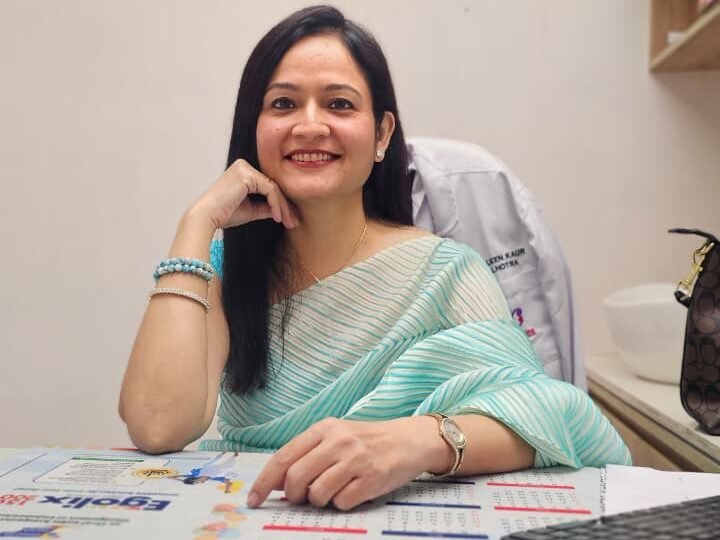
Dr. Jasleen Kaur Malhotra
Gynaecologist, Obstetrician & Infertility Specialist
📍 Address: Clinic No. 56A, Behind Main Market, Sector 6, Dwarka, New Delhi – 110075
📞 Phone: +91-99105-52246
🌐 Website: gynaefemmewellnessdwarka.com