
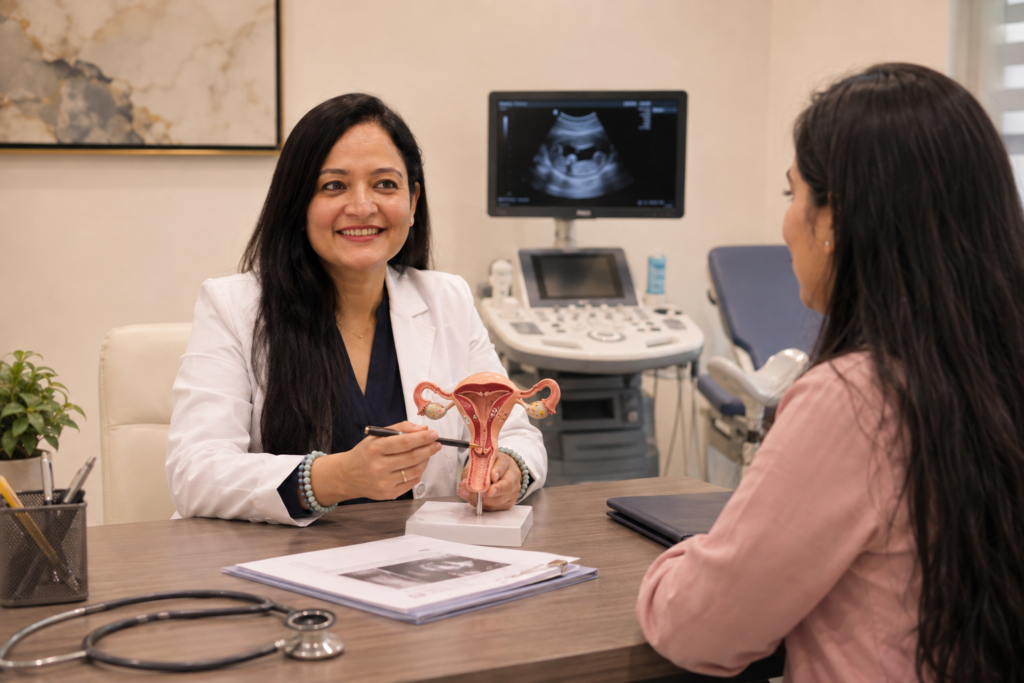
Women’s health changes throughout life, and having access to the right medical professional can make it easier to understand those changes. From painful periods and hormonal concerns to pregnancy planning, fertility, menopause, infections, and preventive screening, a qualified gynaecologist in Dwarka can provide specialized care based on individual needs.
However, choosing a doctor should involve more than looking at an online rating or selecting the nearest clinic. Different gynaecologists may have different areas of experience, treatment approaches, hospital affiliations, and communication styles. A doctor who is suitable for pregnancy care may not necessarily be the ideal choice for managing complex pelvic pain or fertility concerns.
This guide explains what to consider when selecting a gynaecologist in Dwarka, the common problems these specialists treat, when you should schedule an appointment, what happens during a consultation, and how to prepare for a productive visit. The goal is to help women make an informed healthcare decision rather than choosing a specialist based only on advertising or reviews.
Choosing the right gynaecologist can also make regular healthcare more comfortable and convenient. A nearby specialist can simplify follow-up appointments, routine checkups, diagnostic tests, and ongoing treatment. Consider clinic accessibility, consultation timings, communication, and availability when comparing different healthcare options for your needs.
Women should also feel comfortable discussing personal concerns openly during appointments. A supportive gynaecologist can explain symptoms, possible causes, recommended tests, and treatment choices clearly. Keeping previous medical reports and tracking menstrual or other recurring symptoms can help make consultations more productive and personalized.
Table of Contents
Why Seeing a gynaecologist in Dwarka Can Be Important
Many women delay gynaecological consultations because they assume symptoms such as painful periods, irregular cycles, unusual discharge, or pelvic discomfort are simply part of being a woman. While some menstrual changes can be normal, persistent or disruptive symptoms deserve professional evaluation.
A gynaecologist can assess reproductive and hormonal health, identify possible causes of symptoms, recommend appropriate investigations, and discuss treatment options. They can also provide preventive care and guide patients through different stages of life.
For example, irregular periods can have several possible causes, including pregnancy, hormonal contraception, major weight changes, stress, thyroid problems, and conditions such as polycystic ovary syndrome.
Choosing a conveniently located gynaecologist in Dwarka can also make follow-up care easier. Some conditions require monitoring, repeat investigations, medication adjustments, or several consultations. Having a clinic that is reasonably accessible can make it easier to maintain continuity of care.
What Does a Gynaecologist Treat?
A gynaecologist focuses on women’s reproductive and related health concerns. The exact services offered can vary between doctors and clinics, so patients should check whether a particular specialist regularly manages their specific concern.
Common areas of care include:
- Menstrual and period-related problems
- Irregular periods
- Heavy menstrual bleeding
- Severe period pain
- PCOS-related concerns
- Pelvic pain
- Endometriosis
- Fibroids and ovarian cysts
- Vaginal infections and unusual discharge
- Contraception and family planning
- Preconception counselling
- Pregnancy-related care
- Fertility evaluation
- Menopause management
- Cervical health and screening
- Postpartum care
The right gynaecologist in Dwarka should assess the individual rather than assuming that every patient with the same symptom needs the same treatment.

1. Check Qualifications and Relevant Experience
One of the first things to consider when selecting a gynaecologist in Dwarka is professional qualification and clinical experience. Look for appropriate medical training and postgraduate specialization in obstetrics and gynaecology, along with valid professional registration.
Qualifications establish the foundation, but experience also matters. A doctor who regularly handles a particular type of problem may be more suitable for a patient with that concern.
Match Experience to Your Healthcare Need
Suppose you are experiencing persistent pelvic pain. You may want a specialist who regularly evaluates conditions such as endometriosis, fibroids, ovarian problems, or other causes of pelvic discomfort.
If you are planning a pregnancy, you may instead prioritize experience in preconception counselling, antenatal care, high-risk pregnancy, or fertility evaluation.
Similarly, someone approaching menopause may want a doctor experienced in managing changes in periods, hot flashes, sleep difficulties, vaginal symptoms, and other concerns associated with the menopausal transition.
Therefore, do not simply ask, “Is this doctor good?” Ask, “Does this doctor’s experience match my healthcare needs?”
2. Do Not Depend Only on Online Reviews
Online reviews can help create a shortlist, but they should not be the only factor when choosing a gynaecologist in Dwarka.
Look for patterns instead of focusing on a single positive or negative comment. Do patients consistently mention that the doctor listens carefully? Do they say that treatment explanations are clear? Are patients describing respectful communication and appropriate follow-up?
Consider the number and recency of reviews as well. A profile with many recent reviews may provide more useful information than a profile with only a few ratings.
At the same time, remember that online reviews reflect individual experiences. A patient’s medical situation, expectations, and treatment requirements may be very different from yours.
Use reviews as one piece of information alongside professional qualifications, experience, services, accessibility, and your comfort level.
3. Evaluate Communication and Privacy
Gynaecological consultations often involve personal and sensitive information. You should feel comfortable discussing symptoms, menstrual patterns, sexual health, contraception, fertility, pregnancy history, medications, and previous medical problems.
A good gynaecologist in Dwarka should communicate respectfully and explain medical information in language you can understand.
During an appointment, consider whether the doctor:
- Gives you enough opportunity to explain your concerns
- Asks relevant questions about your medical history
- Explains possible causes of your symptoms
- Tells you why a test is being recommended
- Discusses treatment choices
- Explains possible side effects or limitations
- Provides clear follow-up instructions
- Takes your concerns seriously
You do not need to understand every medical term. A good consultation should help you leave with a clearer understanding of what happens next.
4. Understand the Importance of Menstrual Health
Your menstrual cycle can provide useful information about reproductive and general health. Changes in cycle length, bleeding amount, duration, or pain may sometimes indicate an underlying issue.
A typical menstrual cycle varies between individuals. According to NHS guidance, cycles between 21 and 35 days can fall within the usual range for adults, although individual patterns differ.
Irregular periods can occur for many reasons. Puberty, the transition toward menopause, pregnancy, contraception, stress, significant weight changes, excessive exercise, thyroid problems, and PCOS are among possible causes.
Keeping a period diary or using a reliable tracking application can help you provide useful information during your consultation.
When Period Changes Need Attention
You should consider speaking with a gynaecologist in Dwarka if your periods suddenly become very different from your normal pattern, last longer than usual, become significantly more painful, or interfere with work, education, exercise, sleep, or daily activities.
Heavy bleeding can also be associated with conditions involving the uterus or ovaries, including fibroids, endometriosis, adenomyosis, and other causes.
The doctor may recommend investigations depending on your symptoms and medical history.
5. Know When Pelvic Pain Should Be Evaluated
Pelvic pain can have many causes. Mild discomfort around menstruation can be common, but severe, persistent, worsening, or recurrent pain should not automatically be dismissed as normal.
Period pain can sometimes be associated with conditions such as endometriosis, adenomyosis, fibroids, or pelvic inflammatory disease.
A gynaecologist in Dwarka may ask about the timing of pain, its intensity, relationship to periods, pain during intercourse, urinary or bowel symptoms, previous pregnancies, medications, and other health concerns.
Depending on the clinical assessment, additional testing may be considered. An ultrasound, for example, may be useful in some situations, but it is not automatically required for every patient.
If pelvic pain is severe or significantly worse than usual, prompt medical assessment may be appropriate.
6. Consider Pregnancy and Preconception Care
Women planning a family may benefit from discussing pregnancy preparation with a gynaecologist in Dwarka before trying to conceive.
Preconception counselling can involve reviewing existing health conditions, medications, previous pregnancies, menstrual patterns, lifestyle factors, vaccination status, and other relevant considerations.
Women with irregular periods may also benefit from medical advice when trying to conceive. Irregular cycles can sometimes indicate irregular ovulation, which may make conception more difficult.
During pregnancy, patients may also need regular monitoring and guidance about nutrition, medications, screening, warning symptoms, and delivery planning.
If a pregnancy is considered high-risk, the doctor may recommend additional monitoring or referral to another specialist depending on the situation.

7. Ask About Fertility Evaluation
Difficulty conceiving can be emotionally challenging, and patients often search for answers online before speaking with a medical professional.
A gynaecologist in Dwarka can begin by taking a detailed history and assessing menstrual cycles, ovulation patterns, previous pregnancies, medical conditions, medications, and other relevant factors.
Fertility evaluation is not necessarily limited to one partner. Depending on the situation, both partners may need appropriate assessment.
Avoid assuming that fertility problems are always caused by the woman. Several factors can affect conception, and a structured medical evaluation is more useful than relying on online fertility advice.
If specialized reproductive treatment is required, a gynaecologist may recommend consultation with a fertility or reproductive medicine specialist.
8. Pay Attention to Abnormal Bleeding
Bleeding between periods or after sexual intercourse can have several causes. It is often not caused by a serious condition, but it should still be discussed with a healthcare professional.
A doctor may consider factors such as contraception, pregnancy, infections, cervical changes, hormonal causes, or other reproductive health conditions.
The evaluation depends on age, symptoms, medical history, pregnancy possibility, and examination findings.
If unusual bleeding occurs together with pelvic or abdominal pain after a missed period, prompt assessment is especially important because ectopic pregnancy can be an emergency.
9. Do Not Ignore Unusual Vaginal Symptoms
Changes in vaginal discharge, itching, burning, odor, irritation, or discomfort can have different causes.
Some symptoms may be related to infections, while others can occur because of hormonal changes or irritation. Self-diagnosing based on internet searches can sometimes result in inappropriate treatment.
A gynaecologist in Dwarka can evaluate your symptoms and decide whether an examination, laboratory testing, or other investigation is appropriate.
Avoid repeatedly using medications without knowing the underlying cause, particularly when symptoms return after treatment.
10. Ask About Preventive Women’s Health
Gynaecological care is not only about treating symptoms. Preventive healthcare is also important.
Depending on age, medical history, risk factors, and local recommendations, preventive care may include discussions about contraception, cervical cancer screening, reproductive planning, breast health awareness, and menopause.
Cervical cancer screening is an important part of prevention. WHO guidance emphasizes HPV-based testing as a major approach to cervical cancer prevention, with screening strategies depending on population and healthcare programme.
Do not assume that every woman needs the same screening test at the same age or interval. Ask your doctor which screening approach is appropriate for your circumstances.
What Happens During a Gynaecology Consultation?
Knowing what to expect can reduce anxiety before visiting a gynaecologist in Dwarka.
The appointment will usually begin with questions about your symptoms and medical history. Depending on your concern, the doctor may ask about:
- Your menstrual cycle
- Date of your last period
- Pregnancy history
- Previous surgeries
- Current medications
- Allergies
- Contraception
- Previous diagnoses
- Family medical history
- Fertility concerns
- Pain or bleeding patterns
An examination may or may not be necessary. The need depends on the symptoms and clinical situation.
If an examination is recommended, you can ask the doctor to explain what it involves and why it is needed. Understanding the purpose of an examination can make the process more comfortable.
Testing is also individualized. Depending on symptoms, a doctor may consider blood tests, urine testing, pregnancy testing, ultrasound, cervical assessment, infection testing, or other investigations.
How to Prepare for Your Appointment
Preparing beforehand can make your consultation more useful.
Keep a Symptom Record
Write down when your symptoms started, how frequently they occur, and whether they are becoming better or worse.
For menstrual concerns, record the first day of each period, approximate duration, bleeding intensity, pain level, and unusual symptoms.
Bring Previous Reports
Take relevant ultrasound reports, blood test results, prescriptions, discharge summaries, and previous treatment records.
This can help your doctor understand what has already been investigated and avoid unnecessary repetition.
Choosing the right gynaecologist in Dwarka can also make regular healthcare more comfortable and convenient. A nearby specialist can simplify follow-up appointments, routine checkups, diagnostic tests, and ongoing treatment. Consider clinic accessibility, consultation timings, communication, and availability when comparing different healthcare options for your needs.
Women should also feel comfortable discussing personal concerns openly during appointments. A supportive gynaecologist can explain symptoms, possible causes, recommended tests, and treatment choices clearly. Keeping previous medical reports and tracking menstrual or other recurring symptoms can help make consultations more productive and personalized.
A good gynaecologist should focus on personalized care rather than using the same approach for every patient. Women’s health needs can vary with age, lifestyle, medical history, and reproductive goals. Open communication, proper diagnosis, and regular follow-up can help patients feel more confident about managing their health.
Prepare Questions
Write your questions before the appointment. You may want to ask:
- What could be causing my symptoms?
- Do I need any tests?
- What is the purpose of each recommended test?
- What treatment options are available?
- Are there alternatives?
- What side effects should I know about?
- When should I return for follow-up?
- Which symptoms require urgent attention?
A clear discussion can help you participate more confidently in healthcare decisions.
How to Compare Clinics in Dwarka
When comparing options for a gynaecologist in Dwarka, consider practical factors as well as medical expertise.
Location and Accessibility
A conveniently located clinic can make routine follow-ups easier. Consider travel time, parking, public transport, clinic timings, and appointment availability.
Hospital or Diagnostic Support
If your condition may require imaging, procedures, surgery, or hospital-based care, find out where those services are available.
Appointment System
Ask whether appointments are scheduled in advance, whether follow-up appointments are easy to obtain, and how the clinic handles urgent concerns.
Continuity of Care
Whenever possible, having a consistent doctor can make it easier to track symptoms and treatment response over time.

Warning Signs That Need Prompt Medical Attention
Routine appointments are appropriate for many concerns, but some symptoms require faster evaluation.
Seek urgent medical attention if you experience severe or rapidly worsening pelvic pain, significant vaginal bleeding, fainting, severe weakness, or concerning symptoms during a possible pregnancy.
Unusual vaginal bleeding combined with pelvic pain after a missed period can require urgent assessment because ectopic pregnancy is one possible cause.
Similarly, severe period pain that does not improve and is affecting normal activities should not simply be accepted as something you have to tolerate.
If symptoms are severe or potentially life-threatening, use emergency medical services rather than waiting for a routine clinic appointment.
Frequently Asked Questions
When should I visit a gynaecologist in Dwarka?
You can consider an appointment for persistent or unusual menstrual changes, heavy bleeding, severe period pain, pelvic pain, abnormal discharge, fertility concerns, pregnancy planning, contraception, menopause-related symptoms, or preventive women’s health care.
How do I choose a good gynaecologist in Dwarka?
Check the doctor’s qualifications, relevant experience, services, communication style, clinic accessibility, diagnostic support, and follow-up process. Online reviews can help with shortlisting but should not be the only deciding factor.
Are irregular periods always a sign of a medical problem?
No. Irregular cycles can occur for several reasons and are not always caused by disease. However, a persistent change in your normal menstrual pattern should be discussed with a healthcare professional, particularly when other symptoms are present.
How heavy is too heavy for a period?
There is no single amount that is considered excessive for every woman. However, needing to change menstrual products very frequently, bleeding for more than seven days, passing large clots, or having bleeding that interferes with normal activities are reasons to seek medical advice.
Is severe period pain normal?
Period pain is common, but severe pain that affects daily life or becomes progressively worse should be evaluated. Conditions including endometriosis, adenomyosis, fibroids, and pelvic inflammatory disease can sometimes cause significant pain.
What should I bring to my first appointment?
Bring previous medical reports, medication details, relevant prescriptions, allergy information, menstrual records, and a list of questions. Accurate information about symptoms and previous treatments can make the consultation more productive.
Does every patient need a pelvic examination?
No. The examination depends on your symptoms, history, age, and clinical assessment. If an examination is recommended, you can ask the doctor to explain its purpose and what it involves.
Can a gynaecologist in Dwarka help with fertility problems?
A gynaecologist can assess menstrual and reproductive health and begin an appropriate fertility evaluation. If specialized fertility treatment is needed, referral to a reproductive medicine or fertility specialist may be recommended.
Is cervical cancer screening important?
Yes. Cervical cancer screening is an important preventive health measure. WHO recommends HPV-based strategies as an important approach to cervical cancer prevention, although the appropriate test and screening schedule depend on the individual and local programme.
Can I change my gynaecologist if I am uncomfortable?
Yes. You should feel respected and comfortable enough to discuss personal health concerns. If communication is consistently poor or you feel your concerns are not being addressed, seeking another qualified professional is reasonable.
Conclusion
Choosing the right gynaecologist in Dwarka is an important part of taking care of women’s health. The best choice should not be based solely on ratings, advertisements, or proximity. Instead, consider qualifications, relevant clinical experience, communication, available services, accessibility, diagnostic support, and follow-up care.
Whether you are dealing with irregular periods, heavy bleeding, pelvic pain, PCOS, fertility concerns, pregnancy planning, menopause, infections, or preventive health needs, professional evaluation can help you understand your options.
Keep track of your symptoms, bring your previous medical records, ask questions, and be open about your health history. Most importantly, do not ignore symptoms that are persistent, severe, or significantly different from your normal pattern.
A trusted gynaecologist can also guide women about preventive healthcare and healthy lifestyle choices. Regular discussions about menstrual health, contraception, pregnancy planning, cervical screening, and menopause can help women understand their changing health needs and seek medical attention promptly when unusual symptoms appear.
A qualified gynaecologist in Dwarka can help you navigate women’s health concerns with appropriate assessment and individualized care. The right doctor is ultimately the one whose expertise and approach match your personal healthcare needs.
When selecting a gynaecologist, consider the overall patient experience along with professional qualifications. A convenient location, clear appointment process, respectful communication, proper diagnostic support, and reliable follow-up can make ongoing healthcare easier and help build a comfortable, long-term doctor-patient relationship.
Contact Information

Dr. Jasleen Kaur Malhotra
Gynaecologist, Obstetrician & Infertility Specialist
📍 Address: Clinic No. 56A, Behind Main Market, Sector 6, Dwarka, New Delhi – 110075
📞 Phone: +91-99105-52246
🌐 Website: gynaefemmewellnessdwarka.com