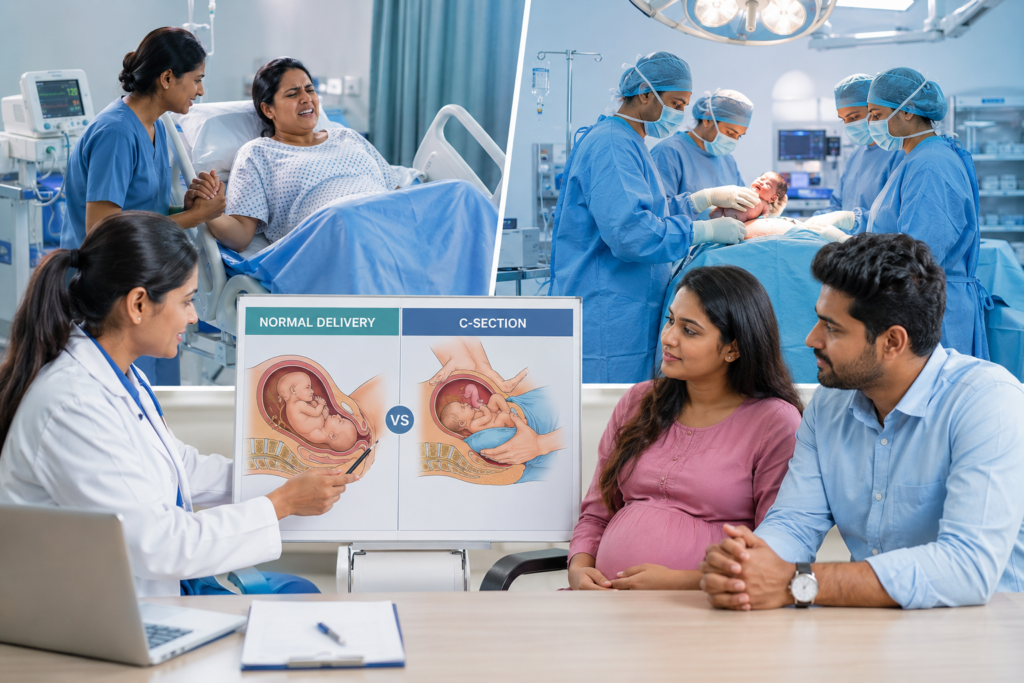
Pregnancy is one of the most exciting and life-changing experiences in a woman’s life. As the due date approaches, one of the most common questions expecting parents ask is “Normal Delivery vs C-Section: Which Is Better?” Every pregnancy is unique, and the safest method of delivery depends on the mother’s health, the baby’s condition, and medical recommendations. While some women are able to have a vaginal birth, others may require a Cesarean section (C-section) to ensure the safety of both mother and baby.
Understanding Normal Delivery vs C-Section: Which Is Better? helps parents make informed decisions and reduces anxiety before childbirth. Rather than viewing one method as universally better than the other, it is important to recognize that each delivery method has its own advantages, risks, recovery process, and medical indications.
Normal delivery is often preferred when there are no pregnancy complications because it generally involves a shorter recovery period and fewer surgical risks. On the other hand, a C-section can be a lifesaving procedure when complications arise, such as fetal distress, placenta previa, or certain maternal health conditions.
This comprehensive guide explores Normal Delivery vs C-Section: Which Is Better?, comparing both methods in terms of procedure, benefits, risks, recovery, pain management, medical necessity, and long-term outcomes. By the end of this article, you will have a clearer understanding of both delivery methods and be better prepared to discuss your birth plan with your obstetrician.
Table of Contents
Understanding Childbirth
Childbirth is the natural process through which a baby is born. It generally occurs between 37 and 42 weeks of pregnancy, although the exact timing varies for every woman.
There are two primary methods of childbirth:
- Normal Delivery (Vaginal Birth)
- Cesarean Section (C-Section)
When discussing Normal Delivery vs C-Section: Which Is Better?, it is important to remember that the primary goal is always a safe delivery for both the mother and the baby.
What Is Normal Delivery?
Normal delivery, also known as vaginal birth, is the natural process in which the baby passes through the birth canal without surgical intervention.
Labor usually progresses through three stages:
Stage 1: Labor Begins
During this stage:
- The cervix gradually softens.
- The cervix dilates up to 10 centimeters.
- Contractions become regular and stronger.
This is often the longest stage of labor.
Stage 2: Delivery of the Baby
Once the cervix is fully dilated:
- The mother begins pushing.
- The baby moves through the birth canal.
- Healthcare providers monitor both mother and baby throughout delivery.
Stage 3: Delivery of the Placenta
After the baby is born:
- The placenta is delivered.
- The uterus begins contracting to reduce bleeding.
This stage typically lasts between 5 and 30 minutes.
Understanding the normal birth process helps parents better evaluate Normal Delivery vs C-Section: Which Is Better?
What Is a C-Section?
A Cesarean section, commonly called a C-section, is a surgical procedure used to deliver a baby through incisions made in the mother’s abdomen and uterus.
The procedure is usually performed under regional anesthesia, allowing the mother to remain awake while minimizing pain.
A C-section may be:
- Planned (elective)
- Unplanned (emergency)
Doctors recommend this procedure only when vaginal delivery is not considered the safest option for the mother or baby.
Learning about surgical delivery is an essential part of understanding Normal Delivery vs C-Section: Which Is Better?
Common Reasons for a C-Section
Although many pregnancies result in successful vaginal births, some situations require surgical delivery.
Common medical reasons include:
Fetal Distress
If the baby’s heart rate indicates that the baby is not receiving enough oxygen, an emergency C-section may be necessary.
Breech Position
When the baby is positioned feet-first or sideways instead of head-first, vaginal delivery may become difficult or unsafe.
Placenta Previa
Placenta previa occurs when the placenta covers part or all of the cervix, making vaginal delivery unsafe.
Multiple Pregnancy
Women carrying twins, triplets, or more babies sometimes require a C-section depending on fetal positioning and pregnancy complications.
Previous C-Section
Some women who have previously undergone a C-section may require another surgical delivery, although vaginal birth after cesarean (VBAC) may be possible in certain situations.
Slow Labor Progress
If labor stops progressing despite adequate contractions, a C-section may become necessary.
These medical situations play an important role when evaluating Normal Delivery vs C-Section: Which Is Better?
Benefits of Normal Delivery
When pregnancy is uncomplicated, healthcare providers often recommend vaginal birth because it offers several advantages.
Faster Recovery
Most mothers recover more quickly after a normal delivery compared to major abdominal surgery.
Many women resume light daily activities within a shorter period.
Lower Surgical Risk
Normal delivery avoids:
- Surgical incisions
- Anesthesia-related complications
- Surgical infections
Shorter Hospital Stay
Most mothers who have a vaginal birth are discharged within 24 to 48 hours, depending on their recovery and their baby’s health.
Earlier Breastfeeding
Many mothers begin breastfeeding immediately after birth because recovery is generally quicker.
Better Respiratory Adaptation for Babies
During vaginal birth, pressure through the birth canal helps remove fluid from the baby’s lungs, supporting normal breathing after delivery.
These benefits are often considered when discussing Normal Delivery vs C-Section: Which Is Better?
Benefits of a C-Section
Although a C-section is major surgery, it provides significant advantages in specific medical situations.
Can Be Life-Saving
A C-section allows doctors to respond quickly during emergencies involving the mother or baby.
Reduced Risk During Certain Complications
Surgical delivery may reduce risks associated with:
- Placenta previa
- Umbilical cord complications
- Severe fetal distress
- Obstructed labor
Planned Delivery
Elective C-sections allow families and healthcare providers to schedule delivery in advance when medically appropriate.
Lower Risk of Birth Trauma in Certain Cases
When vaginal delivery is likely to be difficult, a C-section may reduce the risk of injuries to the baby.
These advantages demonstrate why the answer to Normal Delivery vs C-Section: Which Is Better? depends on individual medical circumstances rather than personal preference alone.
Factors That Influence the Choice of Delivery Method

Several medical factors influence whether a woman can safely have a vaginal birth or may require a C-section.
These include:
- Mother’s overall health
- Baby’s position
- Pregnancy complications
- Previous delivery history
- Fetal heart rate
- Labor progression
- Placental position
Because every pregnancy is different, healthcare providers evaluate these factors carefully before recommending the safest delivery method.
This individualized approach is essential when considering Normal Delivery vs C-Section: Which Is Better?
Risks of Normal Delivery
Although vaginal birth is considered the preferred option for many healthy pregnancies, it is not completely free of risks. Understanding the possible complications helps expecting parents make informed decisions when evaluating Normal Delivery vs C-Section: Which Is Better?
Perineal Tears
During childbirth, the tissues between the vagina and anus may stretch or tear.
Minor tears often heal naturally, while more severe tears may require stitches and additional recovery time.
Heavy Bleeding
Some women experience excessive bleeding after delivery, known as postpartum hemorrhage. Although uncommon, it requires immediate medical attention.
Pelvic Floor Weakness
A vaginal birth may temporarily weaken the pelvic floor muscles.
Some women experience:
- Urinary leakage
- Reduced pelvic support
- Temporary discomfort
Pelvic floor exercises recommended by healthcare professionals can often improve recovery.
Risks of a C-Section
A Cesarean section is a major surgical procedure and carries risks associated with surgery and anesthesia.
Understanding these risks is important when discussing Normal Delivery vs C-Section: Which Is Better?
Surgical Infection
Although hospitals take precautions to reduce infection risk, surgical wounds can occasionally become infected.
Increased Blood Loss
A C-section generally involves more blood loss than a vaginal delivery.
Blood Clots
Major surgery slightly increases the risk of developing blood clots, particularly in the legs.
Longer Recovery
Because abdominal muscles and the uterus are surgically opened, recovery usually takes longer than after a vaginal birth.
Future Pregnancy Considerations
Women who have undergone a C-section may have a higher likelihood of requiring another C-section in future pregnancies, depending on individual medical circumstances.
Recovery: Normal Delivery vs C-Section
Recovery is one of the biggest differences when comparing Normal Delivery vs C-Section: Which Is Better?
Recovery After Normal Delivery
Most mothers recover relatively quickly.
Recovery generally includes:
- Walking within a few hours
- Returning to light activities sooner
- Shorter hospital stay
- Less postoperative pain
Healing time varies depending on labor duration and whether stitches were required.
Pain After a C-Section
During surgery, anesthesia prevents pain.
When considering Normal Delivery vs C-Section: Which Is Better?, it is important to distinguish between labor pain and postoperative recovery pain.
Breastfeeding After Delivery
Breastfeeding is possible after both delivery methods.
After Normal Delivery
Many mothers begin skin-to-skin contact and breastfeeding shortly after birth.
Earlier breastfeeding may support milk production and bonding.
After C-Section
Breastfeeding can also begin soon after surgery, although temporary discomfort from the incision may make positioning more challenging.
Healthcare providers and lactation consultants can suggest comfortable feeding positions during recovery.
Cost Comparison
The cost of childbirth varies depending on:
- Hospital
- Location
- Medical complications
- Insurance coverage
- Length of hospital stay
In many healthcare settings:
- Normal delivery is generally less expensive.
- C-sections usually involve higher costs because of surgery, anesthesia, medications, and longer hospitalization.
When discussing Normal Delivery vs C-Section: Which Is Better?, cost should never outweigh medical safety.
When Doctors Recommend Normal Delivery
Healthcare providers generally encourage vaginal birth when pregnancy remains healthy and uncomplicated.
Normal delivery may be recommended if:
- The pregnancy is full-term.
- The baby is positioned head-down.
- Labor progresses normally.
- There are no significant maternal or fetal complications.
- The mother has no medical condition requiring surgical delivery.
Every pregnancy is evaluated individually before making recommendations.
When Doctors Recommend a C-Section
A C-section is recommended only when it offers the safest outcome for the mother or baby.
Common situations include:
Placenta Previa
When the placenta blocks the cervix, vaginal delivery is usually unsafe.
Fetal Distress
Abnormal fetal heart rate patterns may indicate the baby requires immediate delivery.
Breech Presentation
If the baby is not positioned head-first near delivery, a C-section may be recommended.
Multiple Pregnancy
Certain twin or higher-order multiple pregnancies require surgical delivery.
Previous Uterine Surgery
Some women with previous uterine surgeries may be advised against labor.
Understanding these medical indications provides a balanced perspective on Normal Delivery vs C-Section: Which Is Better?
Can You Have a Vaginal Birth After a C-Section (VBAC)?
Some women who previously had a C-section may be candidates for Vaginal Birth After Cesarean (VBAC).
Eligibility depends on factors such as:
- Type of previous uterine incision
- Overall maternal health
- Pregnancy complications
- Hospital facilities
- Obstetrician’s assessment
VBAC is not appropriate for every pregnancy, so decisions should always be made in consultation with an experienced healthcare provider.
Emotional Recovery After Childbirth
Physical healing is only one aspect of postpartum recovery.
Many mothers experience emotional changes due to hormonal fluctuations, fatigue, and the adjustments of caring for a newborn.
Common emotions include:
- Joy
- Anxiety
- Mood swings
- Fatigue
- Emotional sensitivity
Strong emotional support from family members and healthcare providers plays an important role regardless of whether the birth was vaginal or by C-section.
Importance of Following Medical Advice
Birth plans are helpful, but flexibility is equally important.
Unexpected medical situations sometimes require changes in the planned delivery method.
Trusting qualified healthcare professionals helps ensure the safest possible outcome for both mother and baby.
Ultimately, the answer to Normal Delivery vs C-Section: Which Is Better? depends on individual medical needs rather than personal preference alone.
Common Myths About Childbirth
There are many misconceptions surrounding childbirth, and believing these myths can create unnecessary fear and confusion. Understanding the facts helps expecting parents make informed decisions when considering Normal Delivery vs C-Section: Which Is Better?
Myth 1: Normal Delivery Is Always Better
Fact: Vaginal delivery offers several benefits for uncomplicated pregnancies, but it is not always the safest option. In certain medical situations, a C-section is the recommended method because it protects the health of both the mother and the baby.
Myth 2: A C-Section Is the Easier Option
Fact: Although labor pain is avoided during surgery through anesthesia, a C-section is still a major abdominal operation that requires a longer recovery period and careful postoperative care.
Myth 3: You Cannot Have a Normal Delivery After a C-Section
Fact: Some women may be eligible for a Vaginal Birth After Cesarean (VBAC). The decision depends on several medical factors, including the previous uterine incision, current pregnancy, and the healthcare provider’s assessment.
Myth 4: Babies Born by C-Section Are Less Healthy
Fact: Most babies delivered by C-section are perfectly healthy. The method of birth does not determine a child’s intelligence, growth, or future development. What matters most is that the baby is delivered safely.
Myth 5: Every Pregnancy Will Have the Same Type of Delivery
Fact: Each pregnancy is different. A woman may have a normal delivery in one pregnancy and require a C-section in another, depending on medical circumstances.
Tips for Preparing for Childbirth
Preparing physically and emotionally can help make the birth experience more positive.
Attend Regular Prenatal Checkups
Routine prenatal care allows healthcare providers to monitor the health of both mother and baby and identify potential complications early.
Learn About Labor
Childbirth education classes can help expecting parents understand:
- Labor stages
- Breathing techniques
- Pain management options
- Newborn care
- Breastfeeding basics
Maintain a Healthy Lifestyle
A balanced lifestyle supports a healthy pregnancy.
Focus on:
- Nutritious meals
- Adequate hydration
- Regular physical activity approved by your doctor
- Sufficient sleep
Pack Your Hospital Bag Early
Prepare essential items before the due date, including:
- Medical documents
- Comfortable clothing
- Toiletries
- Baby clothes
- Phone charger
- Nursing essentials
Good preparation can reduce stress regardless of whether you have a vaginal birth or a C-section.
Talking to Your Healthcare Provider
Open communication with your obstetrician is one of the most important aspects of pregnancy care.
Consider discussing:
- Your birth preferences
- Pain management options
- Possible pregnancy complications
- Recovery expectations
- Breastfeeding plans
- Emergency situations
A flexible birth plan allows healthcare providers to make the safest decisions if unexpected circumstances arise.
When discussing Normal Delivery vs C-Section: Which Is Better?, remember that every pregnancy is unique and should be evaluated individually.
Frequently Asked Questions
Which is safer, normal delivery or a C-section?
For most healthy pregnancies, vaginal delivery is generally considered the preferred option because it usually involves a shorter recovery period and fewer surgical risks. However, when complications arise, a C-section may be the safest method for both mother and baby.
Is a C-section more painful than normal delivery?
The experiences are different. Vaginal delivery involves labor pain, while a C-section avoids pain during surgery through anesthesia but is followed by postoperative discomfort during recovery.
Can I choose a C-section even if I don’t have complications?
Policies vary by healthcare provider and country. Some elective C-sections may be available, but the decision should always be made after discussing the potential benefits and risks with your obstetrician.
How long does recovery take after childbirth?
Recovery varies for each individual.
- Vaginal delivery often allows earlier return to daily activities.
- Recovery after a C-section generally takes longer because it is a major surgical procedure.
Can I breastfeed after a C-section?
Yes. Most mothers can successfully breastfeed after a C-section. Healthcare providers and lactation consultants can recommend comfortable feeding positions during recovery.
Will I always need a C-section after my first C-section?
Not necessarily. Some women may be candidates for a Vaginal Birth After Cesarean (VBAC), depending on their medical history and the current pregnancy.
Which delivery method is better for the baby?
Both methods can result in healthy outcomes. The best choice depends on medical circumstances, fetal health, and professional clinical recommendations.
How do doctors decide the safest delivery method?
Doctors consider factors such as:
- Baby’s position
- Mother’s health
- Pregnancy complications
- Labor progression
- Placental position
- Previous pregnancies
- Fetal well-being
These factors help determine the safest approach.
Final Comparison
When comparing Normal Delivery vs C-Section: Which Is Better?, there is no single answer that applies to every pregnancy.
Normal Delivery May Be More Suitable When:
- Pregnancy is healthy.
- Labor progresses normally.
- The baby is positioned head-down.
- No significant complications are present.
A C-Section May Be More Suitable When:
- The baby shows signs of distress.
- Placenta previa is present.
- Labor fails to progress.
- The baby is in a breech position.
- Certain maternal or fetal complications require surgical delivery.
The most appropriate delivery method is the one that provides the safest outcome for both mother and baby.
Final Thoughts
Childbirth is a deeply personal experience, and every pregnancy follows its own unique path. Rather than focusing on whether one method is universally better, expecting parents should prioritize informed decision-making, regular prenatal care, and open communication with their healthcare provider.
Understanding Normal Delivery vs C-Section: Which Is Better? allows families to prepare emotionally and practically while remaining flexible if medical circumstances change during pregnancy or labor.
The ultimate goal is not to achieve a specific type of birth but to ensure the safe delivery of a healthy baby and protect the well-being of the mother.
Conclusion
The discussion around Normal Delivery vs C-Section: Which Is Better? often centers on personal preferences, but the most important consideration is medical safety. Normal delivery generally offers quicker recovery, shorter hospital stays, and fewer surgical risks, making it the preferred option for many uncomplicated pregnancies. On the other hand, a C-section is a vital medical procedure that can save lives when complications make vaginal birth unsafe.
Every pregnancy is different, and no single delivery method is ideal for everyone. Factors such as maternal health, fetal position, labor progression, and pregnancy complications all influence the safest approach. By staying informed, attending regular prenatal appointments, and following professional medical advice, expecting parents can approach childbirth with greater confidence and peace of mind.
Ultimately, Normal Delivery vs C-Section: Which Is Better? is not about choosing one method over the other—it is about selecting the delivery option that offers the best possible outcome for both mother and baby.
Contact Information

Dr. Jasleen Kaur Malhotra
Gynaecologist, Obstetrician & Infertility Specialist
📍 Address: Clinic No. 56A, Behind Main Market, Sector 6, Dwarka, New Delhi – 110075
📞 Phone: +91-99105-52246
🌐 Website: gynaefemmewellnessdwarka.com