
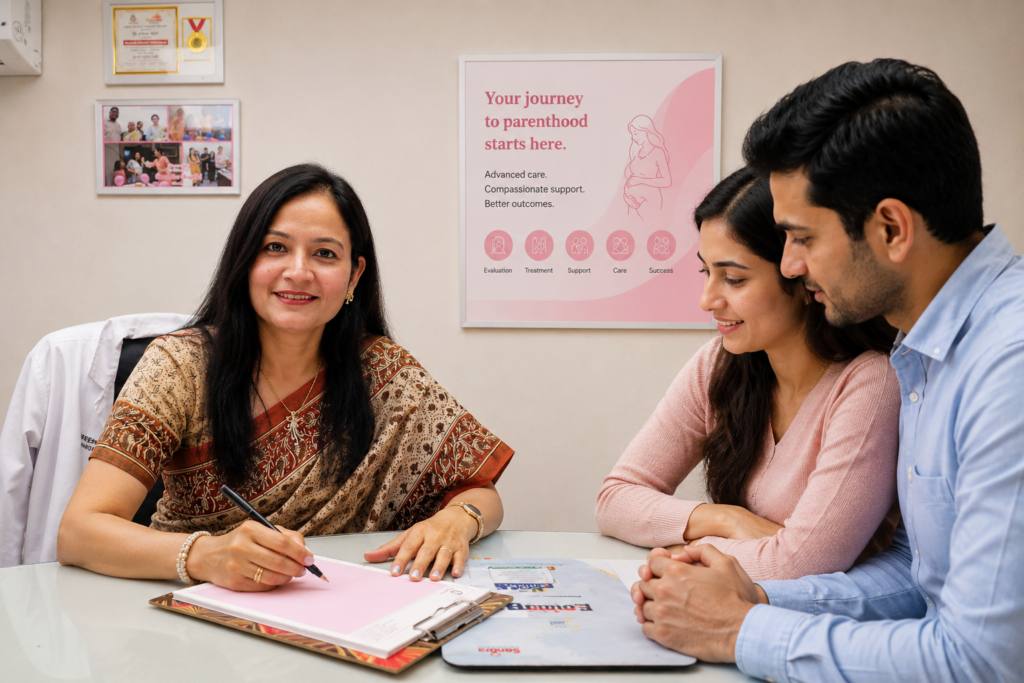
Trying to conceive can be an emotional journey, particularly when pregnancy does not happen as expected. Couples may experience uncertainty, stress, and questions about their reproductive health, especially when family members or social expectations add pressure. Understanding the available medical options and knowing when to seek professional advice can make the next steps feel more manageable.
Seeking Infertility Treatment in Dwarka can be a starting point for individuals and couples who want to understand why conception has been difficult and what options may be suitable for them. Infertility can involve female reproductive factors, male reproductive factors, a combination of both, or unexplained causes. It is not always possible to identify the reason without appropriate medical evaluation.
Fertility care is not limited to advanced procedures. Depending on the circumstances, it may involve lifestyle guidance, investigations, medication, treatment of an underlying condition, or assisted reproductive techniques. The right approach depends on medical history, age, test results, personal preferences, and other relevant factors.
This guide explains when to seek fertility advice, what an evaluation may involve, which treatment options doctors may discuss, and how to choose a suitable provider in Dwarka, Delhi. The aim is to help readers make informed decisions while approaching the process with realistic expectations and compassion for themselves and their partners.
Table of Contents
What Is Infertility and When Should You Seek Help?
Infertility generally refers to difficulty achieving pregnancy after a period of regular, unprotected sexual intercourse. Medical guidance commonly recommends an evaluation after 12 months of trying for women younger than 35, after six months for women aged 35 or older, and sooner when the woman is over 40 or a known reproductive concern exists. Individual circumstances can change these timelines.
Infertility Treatment in Dwarka, It is important to understand that difficulty conceiving does not automatically mean pregnancy is impossible. Some couples conceive naturally after further time, while others benefit from identifying and addressing a medical issue.
Signs That a Fertility Evaluation May Be Appropriate
Consider discussing fertility with a qualified healthcare professional if:
- Pregnancy has not occurred within the recommended timeframe.
- Menstrual cycles are consistently irregular or absent.
- There is a history of endometriosis, pelvic inflammatory disease, or reproductive surgery.
- Previous pregnancies involved repeated miscarriages.
- A partner has a history of testicular problems, reproductive surgery, or treatment that could affect fertility.
- There are concerns about sexual function, ejaculation, or other reproductive symptoms.
These signs do not establish a diagnosis. They indicate that an individual assessment may be useful.
People researching Infertility Treatment in Dwarka should avoid delaying an appointment simply because one partner has no obvious symptoms. Fertility difficulties can exist without noticeable warning signs, and an evaluation of both partners can help identify the relevant factors.
Common Causes of Infertility
Pregnancy depends on several processes working together, including ovulation, sperm production, fertilisation, and the development and implantation of an embryo. A difficulty at any stage may affect the chances of conception.
Female Reproductive Factors
Possible causes include:
- Ovulation disorders: Irregular or absent ovulation can make conception less predictable. Conditions such as polycystic ovary syndrome may contribute.
- Fallopian tube problems: Tubes may become blocked or damaged following certain infections, surgery, or other conditions.
- Endometriosis: Tissue similar to the uterine lining grows outside the uterus and may affect reproductive function.
- Uterine conditions: Certain fibroids, polyps, or structural differences may affect fertility or pregnancy, depending on their location and severity.
- Age-related changes: Egg quantity and quality generally decline with age, influencing the likelihood of conception.
Not every person with one of these conditions will experience infertility. The significance of a finding depends on the complete clinical picture.

Male Reproductive Factors
Male fertility can be affected by sperm count, movement, shape, sperm production, hormone levels, or the passage through which sperm travel. Certain infections, hormonal conditions, genetic factors, medications, heat exposure, tobacco use, and previous medical treatments may also play a role.
A semen analysis is often an important initial investigation. If results are abnormal, a clinician may recommend repeating the test or arranging further assessment.
Unexplained Infertility
Sometimes standard investigations do not identify a clear reason for difficulty conceiving. This may be described as unexplained infertility. It does not mean that the problem is imaginary or that no options exist. It means that current testing has not established a specific cause.
Infertility Treatment in Dwarka, A fertility specialist can explain which approaches may be reasonable, taking into account the couple’s age, duration of trying, medical findings, and preferences.
How Infertility Treatment in Dwarka Usually Begins
The first stage of fertility care is generally an assessment rather than an immediate procedure. The purpose is to understand the medical background, identify potential causes, and determine which investigations or interventions may be appropriate.
1. Medical History and Consultation
A clinician may ask about menstrual cycles, previous pregnancies, duration of trying to conceive, medical conditions, surgeries, medications, family history, and lifestyle factors. Questions about sexual health may also be relevant.
Infertility Treatment in Dwarka, Both partners should have an opportunity to share their concerns. Bringing previous reports, prescriptions, and details of earlier fertility treatment can help reduce unnecessary repetition and make the consultation more productive.
2. Recommended Investigations
Testing depends on individual circumstances. It may include:
- Blood tests to assess selected reproductive hormones or other relevant health factors.
- Ultrasound to examine the uterus and ovaries.
- Assessment of ovulation when clinically indicated.
- Tests to evaluate whether the fallopian tubes are open.
- Semen analysis for the male partner.
- Additional investigations when the history or initial results suggest they are necessary.
Not everyone requires every test. A good clinician explains what each investigation is intended to establish and how the result could influence the treatment plan.
3. Discussion of Results and Next Steps
Infertility Treatment in Dwarka, Once the initial assessment is complete, the clinician should explain the findings in understandable language. This discussion may cover possible causes, treatment alternatives, benefits, risks, costs, timelines, and the likelihood of needing further evaluation.
When considering Infertility Treatment in Dwarka, ask whether the proposed plan is based on your specific results rather than a standard package offered to every patient. You should feel comfortable asking questions before agreeing to medication or a procedure.
Treatment Options a Fertility Specialist May Discuss
There is no single fertility treatment that suits everyone. The recommended approach depends on the cause of infertility, the age and health of both partners, previous treatment, and how long conception has been difficult.
Lifestyle Guidance and Timed Intercourse
For some couples, understanding the fertile window and reviewing lifestyle factors may be useful. Ovulation tracking can help identify when pregnancy is more likely, although cycle-tracking methods are not equally reliable for everyone.
A clinician may discuss smoking cessation, limiting alcohol, balanced nutrition, appropriate physical activity, sleep, and the management of existing health conditions. These measures support general health but cannot correct every cause of infertility.
Medication for Ovulation
Infertility Treatment in Dwarka, When ovulation is irregular or absent, a doctor may recommend medication to support egg development and release. The choice of medicine depends on the underlying condition and other clinical factors.
Ovulation-inducing medication requires appropriate medical supervision because it can have side effects and may increase the risk of multiple pregnancy in some circumstances. Patients should not use fertility medicines without a prescription and monitoring plan.
Intrauterine Insemination (IUI)
IUI involves placing prepared sperm into the uterus around the time of ovulation. It may be considered in selected situations, depending on factors such as sperm characteristics, ovulation, and the condition of the fallopian tubes.
IUI is less invasive than IVF, but it is not suitable for every cause of infertility. A specialist can explain whether it is reasonable in a particular case and how its potential benefits compare with other options.
In Vitro Fertilisation (IVF)
IVF involves stimulating the ovaries to produce eggs, collecting those eggs, fertilising them in a laboratory, and transferring an embryo into the uterus when appropriate. Other steps, including embryo freezing, may be considered depending on the treatment plan.
IVF may be recommended for certain tubal problems, some male-factor infertility cases, selected cases of unexplained infertility, or when other treatments have not worked. It involves medical procedures, monitoring, financial considerations, and emotional demands.
Infertility Treatment in Dwarka, Success is not guaranteed. Outcomes vary with age, diagnosis, embryo factors, previous treatment, and other individual circumstances. Ask the specialist to explain the outcome measure being discussed, such as pregnancy per treatment cycle or live birth rate, and which patient group the figures represent.
Treatment for Underlying Conditions
In some situations, treating a contributing condition may improve reproductive health. Depending on the diagnosis, this could involve managing a hormonal disorder, addressing a uterine abnormality, or treating an infection.
Infertility Treatment in Dwarka, Surgery is not automatically necessary when an abnormality is found. The clinician should explain whether intervention is likely to improve fertility and how its risks compare with observation or alternative treatment.

Choosing a Suitable Fertility Provider in Dwarka
Local access can make appointments and follow-up easier, especially when treatment involves repeated visits, blood tests, scans, or time-sensitive procedures. However, convenience should be considered alongside clinical suitability and the quality of communication.
People comparing options for Infertility Treatment in Dwarka should look for a provider who takes a detailed history, explains investigations clearly, discusses alternatives, and respects the patient’s decisions.
Questions to Ask Before Selecting a Provider
Consider asking:
- Who will evaluate our fertility concerns and coordinate our care?
- Which investigations do you recommend, and why?
- What treatment options are suitable for our specific situation?
- What are the potential risks, limitations, and alternatives?
- How will treatment progress be monitored?
- What costs may arise beyond the initial consultation or quoted package?
- How are medical records, test results, and personal information protected?
- If a treatment is unsuccessful, how will the next step be decided?
Check Credentials and Available Services
Infertility Treatment in Dwarka, Verify the relevant professional registration, qualifications, and experience of the clinician responsible for your care. If IVF or another assisted reproductive technique is being considered, confirm that the facility and laboratory arrangements meet applicable requirements.
Not every consultation centre provides every fertility procedure. Ask where investigations are performed, whether specialist referrals are needed, and who will be available if complications or urgent concerns arise.
In-Person or Online Fertility Consultations?
Both formats can have a role in fertility care, but they serve different purposes.
When Online Consultations May Help
An online consultation can be useful for an initial discussion, reviewing previous reports, seeking another opinion, or asking follow-up questions. It may save travel time for people who live farther away or have demanding work schedules.
However, a video or telephone appointment cannot replace investigations or examinations when these are medically necessary. Some treatment stages require an in-person visit, so clarify how the provider coordinates remote and face-to-face care.
When arranging Infertility Treatment in Dwarka, ask whether the provider offers both formats and how confidential information is handled during virtual consultations.
Emotional Well-Being During Fertility Care
Difficulty conceiving can affect confidence, relationships, family interactions, and daily routines. People may feel frustrated when each menstrual cycle brings disappointment, while medical appointments and financial decisions can add pressure.
Infertility Treatment in Dwarka, Emotional responses differ from person to person. There is no single correct way to feel, and experiencing sadness or anxiety does not mean someone is handling the situation poorly.
Communicating With Your Partner
Partners may cope differently. One may want to discuss every detail, while the other may prefer privacy or practical problem-solving. These differences can lead to misunderstandings if each person assumes the other should respond in the same way.
Helpful approaches include:
- Set aside time to talk without phones or other distractions.
- Ask whether your partner wants advice, reassurance, or simply someone to listen.
- Discuss how appointments and treatment decisions will be shared.
- Agree on boundaries for conversations with relatives and friends.
- Avoid blaming either partner for the difficulty conceiving.
Infertility Treatment in Dwarka, A useful question is, “What would help you feel supported this week?” It creates space for honest answers without expecting either person to have all the solutions.
Managing Family and Social Pressure
Infertility Treatment in Dwarka, Professional counselling or psychological support may be helpful if stress, grief, or conflict becomes difficult to manage. Emotional support complements medical care; it should not be presented as a replacement for fertility assessment.

Preparing for Your First Fertility Appointment
A little preparation can help you make better use of the consultation. You do not need to know every medical term or have all the answers before attending.
Before the appointment:
- Write down how long you have been trying to conceive.
- Note menstrual cycle dates and any significant changes, where relevant.
- Bring previous investigations, prescriptions, and treatment records.
- List existing medical conditions, surgeries, and current medicines.
- Prepare questions about tests, treatment alternatives, risks, and costs.
- Discuss with your partner which concerns are most important to address.
You may also want to ask how results will be communicated, whom to contact with questions, and how urgent concerns are handled.
If you are researching Infertility Treatment in Dwarka, compare providers on the basis of their willingness to explain the process and tailor care to your circumstances, not simply on how many procedures they offer.
Costs, Planning, and Treatment Expectations
Fertility care can involve multiple appointments, diagnostic tests, medicines, laboratory procedures, and follow-up visits. The total cost depends on the treatment selected and the individual clinical requirements.
It is sensible to request an itemised estimate before beginning a treatment cycle. Ask which services are included, which medicines or tests may be charged separately, and whether additional procedures could affect the final amount.
Infertility Treatment in Dwarka, Financial planning should include the possibility that more than one treatment cycle may be considered. At the same time, repeated treatment should not be assumed to be necessary for everyone. The clinician should review progress and explain whether continuing, changing the approach, or taking a pause is reasonable.
Time commitments also matter. Some treatments require visits on specific days, while others involve more intensive monitoring. Discuss work schedules, travel, support at home, and recovery time where relevant.
A transparent provider will acknowledge uncertainty and avoid making financial or emotional decisions feel urgent without a clear medical reason.
Frequently Asked Questions
1. When should I look for Infertility Treatment in Dwarka?
Consider an evaluation after 12 months of trying if the woman is under 35, or after six months if she is 35 or older. Seek advice sooner if she is over 40 or either partner has a known reproductive concern. A clinician can advise based on individual circumstances.
2. Should both partners attend the first consultation?
When possible, yes. Fertility difficulties can involve either partner, and reviewing both medical histories can help guide appropriate investigations. If one partner cannot attend, ask whether the first appointment can proceed and what information should be brought.
3. Which tests are usually performed for infertility?
Depending on the medical history, testing may include hormone assessments, ultrasound, ovulation evaluation, fallopian tube testing, and semen analysis. Not everyone needs every investigation. The clinician should explain the purpose of each recommended test.
4. Is IVF necessary for every couple experiencing infertility?
No. IVF is one option among several. The appropriate approach depends on the cause of infertility, age, test results, previous treatment, and personal preferences. Some people may benefit from simpler interventions, while others may need assisted reproductive techniques.
5. Can lifestyle changes improve fertility?
Healthy habits, including avoiding smoking, maintaining balanced nutrition, getting adequate sleep, and managing existing health conditions, can support general health. Their effect on fertility varies, and lifestyle changes cannot resolve every underlying reproductive problem.
6. How can I compare fertility providers in Dwarka?
Check professional credentials, the proposed evaluation process, communication quality, privacy practices, treatment options, and transparent cost estimates. Ask how outcomes are explained and whether recommendations are tailored to your medical findings. Avoid providers who guarantee results.
7. What if the initial fertility tests are normal?
Normal initial results do not always explain why conception has not occurred. A clinician may review the timing and completeness of testing, consider further assessment, or discuss options for unexplained infertility. The next step should reflect your individual circumstances.
Conclusion
Difficulty conceiving can bring uncertainty, but a structured medical evaluation can help individuals and couples understand their options. Learning about possible causes, asking questions, reviewing treatment choices, and seeking emotional support where needed can make the process more informed and manageable.
Choosing Infertility Treatment in Dwarka should involve more than finding a convenient location. Look for qualified professionals who assess both partners when appropriate, explain findings clearly, discuss risks and alternatives, and respect your preferences. Be cautious of guaranteed outcomes and make decisions based on personalised medical advice rather than pressure or assumptions.
Every fertility journey is different. Some people may need limited intervention, while others may require more specialised care. With clear information, appropriate professional guidance, and realistic expectations, you can take the next step toward understanding your reproductive health and deciding what is right for you.
Contact Information

Dr. Jasleen Kaur Malhotra
Gynaecologist, Obstetrician & Infertility Specialist
📍 Address: Clinic No. 56A, Behind Main Market, Sector 6, Dwarka, New Delhi – 110075
📞 Phone: +91-99105-52246
🌐 Website: gynaefemmewellnessdwarka.com