
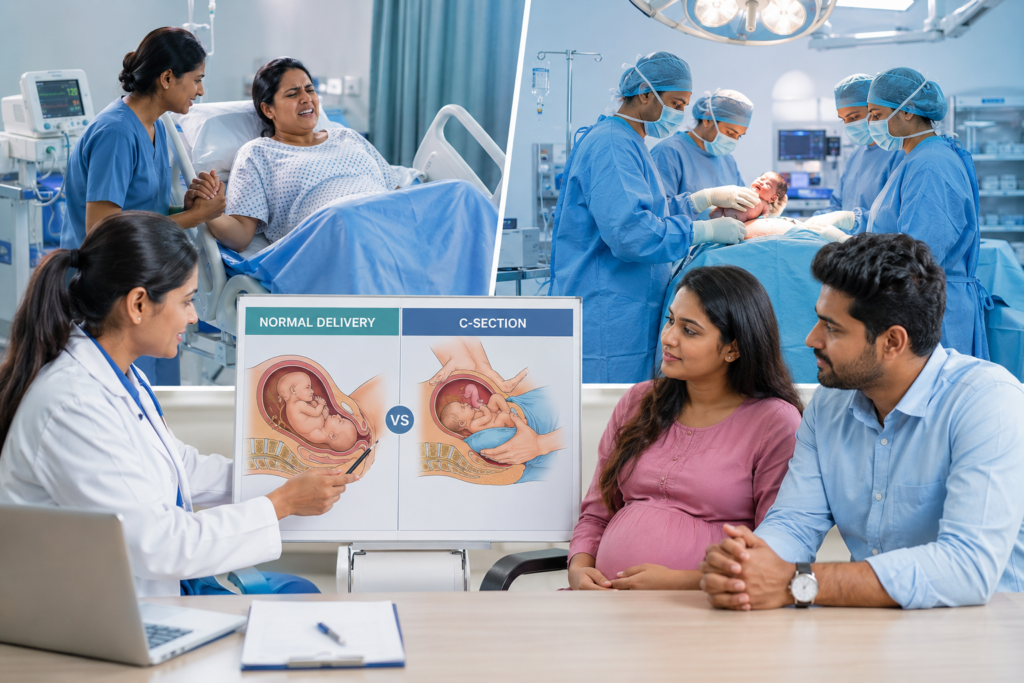
Choosing how a baby will be born is one of the biggest questions during pregnancy. Some parents imagine labor and vaginal birth, while others may be advised to have a cesarean section because of a medical condition or a change during pregnancy. Understanding Normal Delivery vs C-Section can make conversations with your obstetrician more productive and help you prepare emotionally and practically.
There is no single “best” birth method for every pregnancy. A vaginal birth may be appropriate and straightforward for one person, while a cesarean may be the safest option for another. A C-section is major abdominal surgery, but it can be lifesaving when vaginal birth would create significant risk for the mother or baby. The right decision depends on the pregnancy, health history, fetal position, labor progress, previous deliveries, and clinical findings.
This guide explains the differences in a clear, balanced way. It covers how each birth happens, common indications, recovery, pain, risks, baby-related considerations, future pregnancies, and questions to discuss with your healthcare team.
Table of Contents
Understanding Normal Delivery vs C-Section
A normal delivery generally refers to vaginal birth, in which the baby passes through the vagina after labor causes the cervix to open. Labor can begin naturally or be induced when medically appropriate. Depending on the situation, pain relief such as an epidural may be available.
A C-section, or cesarean birth, delivers the baby through surgical incisions made in the abdomen and uterus. It may be planned before labor or performed during labor if circumstances change. Common reasons include labor that does not progress, concerns about the baby’s heart rate, certain placenta problems, breech presentation, some multiple pregnancies, or maternal medical conditions that make vaginal birth unsafe.
1. Normal Delivery vs C-Section: How the Two Birth Methods Happen
During vaginal birth, contractions help the cervix dilate and the baby move down through the birth canal. The mother pushes when appropriate, and the baby is delivered through the vagina. Sometimes additional assistance is needed, including vacuum or forceps, when specific conditions are met. Assisted vaginal birth can avoid a cesarean in selected situations, although it has its own risks.
During a C-section, the mother receives anesthesia, most commonly regional anesthesia such as a spinal or epidural in planned situations. The surgeon makes an incision in the abdomen and uterus and delivers the baby. A catheter and intravenous line are commonly used, and medication is given to reduce infection risk.
The practical experience of Normal Delivery vs C-Section can therefore be very different. Vaginal birth usually involves a period of labor, while a planned C-section follows a surgical schedule. An emergency C-section can happen quickly when the medical team believes waiting would increase risk.
2. Normal Delivery vs C-Section: When Vaginal Birth May Be Appropriate
For many uncomplicated pregnancies, vaginal birth is a reasonable option. The decision is based on the mother’s health, the baby’s position and wellbeing, gestational age, placenta, previous birth history, and how labor develops.
A person may have a vaginal birth without any complications, or labor may involve induction, epidural pain relief, perineal tearing, or assisted delivery. Having a vaginal birth does not guarantee a completely predictable experience.
3. Normal Delivery vs C-Section: When a C-Section May Be Recommended
A cesarean can be planned before labor or become necessary during labor. A doctor may recommend it when the benefits of surgery are expected to outweigh the risks.
Examples include placenta problems, certain fetal positions such as breech, some situations involving multiple babies, failure of labor to progress, or signs that the baby may not be receiving enough oxygen during labor. Certain maternal medical conditions can also make vaginal birth unsafe.
A C-section is not automatically a “safer” option simply because it avoids labor. It is surgery, and surgery carries risks. At the same time, avoiding a medically necessary C-section can also be dangerous. The decision must therefore be individualized.

4. Normal Delivery vs C-Section: Pain and Anesthesia
Pain is one of the most common concerns when comparing birth methods. During vaginal labor, contractions can be painful, but several pain-management options may be available. These can include breathing and relaxation techniques, movement, supportive care, medications, and epidural anesthesia depending on the setting and clinical situation.
A C-section is performed with anesthesia so the mother does not feel the surgical incision itself. However, the abdomen can be sore after surgery as the anesthesia wears off and the incision begins to heal. Pain medication is commonly provided after cesarean birth.
This means “less pain” should not be the only way to compare the two methods. Vaginal birth may involve more pain during labor but generally avoids abdominal surgery. C-section can reduce labor pain during the operation but creates surgical pain during recovery.
5. Recovery Time and Daily Activities
Recovery is another important part of Normal Delivery vs C-Section. After an uncomplicated vaginal birth, many people can become mobile relatively soon. However, recovery still varies. Vaginal soreness, stitches from a tear or episiotomy, fatigue, and postpartum bleeding can affect comfort.
Cesarean recovery generally takes longer because the body is healing from major surgery. The abdominal incision may remain sore for several days, and activities may need to be limited while healing progresses. The NHS notes that recovery after a C-section usually takes longer than after vaginal delivery.
This difference matters when planning childcare, household support, transportation, work leave, and breastfeeding support. A parent recovering from surgery may need more help lifting, moving around, and managing routine tasks.
6. Normal Delivery vs C-Section: Risks for the Mother
Both methods can be safe, but neither is completely risk-free.
Vaginal birth can involve perineal tears, bleeding, infection, pelvic floor symptoms, or the need for assisted delivery. Some people may require an emergency cesarean after labor begins.
C-section risks include infection, bleeding, blood clots, reactions to anesthesia, and, rarely, injury to nearby organs such as the bladder or bowel. Because it is surgery, the risk profile is different from vaginal birth.
When considering Normal Delivery vs C-Section, it is therefore more useful to ask, “Which option has the lowest overall risk for my pregnancy?” rather than “Which method has no risks?” Your doctor can answer that question using your specific medical information.
7. Normal Delivery vs C-Section: Possible Effects on the Baby
The baby’s wellbeing is central to every delivery decision. Vaginal birth exposes the baby to labor and passage through the birth canal. In many uncomplicated pregnancies, this is a safe process.
A C-section can be essential when the baby is in distress or cannot safely be delivered vaginally. However, cesarean birth can also have risks for the newborn. The NHS notes that breathing difficulties can occur, particularly when a C-section is performed before 39 weeks, and accidental skin cuts can occasionally occur during surgery.
8. Normal Delivery vs C-Section: Planned vs Emergency C-Section
Not all cesareans happen under the same circumstances. A planned C-section is scheduled in advance because the healthcare team expects vaginal birth to be unsuitable or too risky.
An emergency C-section may be recommended after labor has already started. Situations can include concerning fetal monitoring, significant bleeding, or labor that is not progressing despite appropriate management. The urgency can range from a relatively prompt decision to a true emergency.
Understanding this distinction can reduce confusion. Someone who has an unplanned C-section has not necessarily “failed” at vaginal birth. The medical team may simply have recognized that continuing labor was no longer the safest option.
9. Normal Delivery vs C-Section and Future Pregnancies
In Normal Delivery vs C-Section, the delivery method can matter beyond the current pregnancy. A cesarean leaves a scar on the uterus, and repeat cesareans can increase the risk of certain complications in future pregnancies, including placenta-related problems and uterine rupture in specific circumstances.
However, having one C-section does not automatically mean every future baby must be delivered by C-section. Many women may be candidates for vaginal birth after cesarean, known as VBAC. Eligibility depends on factors such as the type of uterine incision, previous cesareans, current pregnancy circumstances, and the hospital’s ability to manage an emergency if needed.
If you expect to have more children, tell your obstetrician. Future family plans can be one factor in choosing among reasonable delivery options.
10. Normal Delivery vs C-Section: Emotional Preparation and Birth Expectations
When considering Normal Delivery vs C-Section, a birth plan can help you communicate preferences, but it should leave room for medical changes. Some parents feel disappointed when the delivery method differs from what they imagined. Those feelings are understandable.
When thinking about Normal Delivery vs C-Section, prepare for both possibilities if your pregnancy allows it. Learn about labor, pain relief, hospital procedures, surgical recovery, breastfeeding support, and warning signs after delivery.

Normal Delivery vs C-Section: Key Differences at a Glance
The following Normal Delivery vs C-Section comparison can help summarize the main points:
| Factor | Vaginal Birth | C-Section |
|---|---|---|
| Main process | Baby passes through the vagina | Baby is delivered through abdominal and uterine incisions |
| Labor | Usually involves labor | Planned surgery may occur before labor; emergency surgery can occur during labor |
| Anesthesia | May include epidural or other pain relief | Anesthesia is used for the operation |
| Surgery | No abdominal surgery | Major abdominal surgery |
| Recovery | Often shorter after an uncomplicated birth | Usually longer because of surgical healing |
| Main risks | Tears, bleeding, infection, assisted delivery, possible emergency C-section | Infection, bleeding, clots, anesthesia complications, organ injury |
| Future pregnancies | No uterine surgical scar from the delivery itself | Uterine scar may affect future pregnancy and delivery planning |
| When preferred | When vaginal birth is safe and appropriate | When medical factors make cesarean the safer option |
The table is a general guide, not a substitute for individual medical advice. The safest method can vary significantly from one pregnancy to another.
Normal Delivery vs C-Section: How to Prepare for Either Type of Birth
Preparation can make the birth experience more manageable, regardless of the final delivery method.
Learn the Warning Signs
Know when your maternity team wants you to call or go to the hospital. Your instructions may include guidance about contractions, fluid leakage, bleeding, reduced fetal movement, or other symptoms. Follow the specific plan given by your healthcare provider.
Discuss Pain Relief Early
Ask what pain-relief options are available for labor and what medications are normally used after cesarean surgery. Understanding choices before labor begins can reduce uncertainty.
Plan Practical Support
Arrange help with meals, transportation, older children, household chores, and newborn care. Support can be especially valuable during surgical recovery.
Ask About Breastfeeding and Skin-to-Skin Contact
If breastfeeding is your goal, ask your maternity team how soon feeding and skin-to-skin contact can begin after either type of birth. In many situations, breastfeeding can start soon after cesarean birth when mother and baby are stable.
Keep Your Birth Plan Flexible
A useful birth plan focuses on preferences while acknowledging that medical circumstances can change. Your priority should be a safe outcome for you and your baby.

Common Myths About Normal Delivery vs C-Section
Myth 1: Vaginal Birth Is Always Safer
Not always. When a C-section is medically indicated, it can reduce serious risks to the mother or baby. The safest method depends on the clinical situation.
Myth 2: A C-Section Is the Easy Way Out
This is an unfair description. A C-section is major surgery and involves an incision, anesthesia, postoperative pain, and a longer recovery for many people.
Myth 3: A C-Section Means You Cannot Have a Vaginal Birth Later
Not necessarily. Some people can have VBAC after a previous cesarean, although eligibility must be assessed individually.
Myth 4: The Doctor Can Always Predict the Delivery Method Months in Advance
Some situations are predictable, but others develop during labor. A pregnancy that begins as a low-risk pregnancy can require a change in delivery plan.
Questions to Ask Your Obstetrician
If you are unsure about Normal Delivery vs C-Section, take a written list of questions to your prenatal appointment. Useful questions include:
- Is vaginal birth currently considered safe for me and my baby?
- Is there any medical reason you recommend a C-section?
- What factors could make the delivery plan change?
- What pain-relief options are available during labor?
- If I need a C-section, what should I expect during recovery?
- How could this delivery method affect a future pregnancy?
- If I have had a previous C-section, could I be a candidate for VBAC?
- What warning signs should make me contact the hospital?
- What support will I need during the first few weeks at home?
- What should I pack or arrange before the expected delivery date?
These questions encourage shared decision-making instead of relying on stories from friends, social media, or assumptions about what is “better.”
Frequently Asked Questions
Is vaginal birth better than C-section?
Neither method is universally better. Vaginal birth may offer a shorter recovery when uncomplicated, while C-section can be the safest choice when medical complications make vaginal birth risky. The appropriate method depends on the individual pregnancy.
Is C-section more painful than normal delivery?
When comparing Normal Delivery vs C-Section, pain occurs differently. Vaginal birth can involve significant pain during labor, while C-section usually uses anesthesia during surgery but can cause abdominal soreness afterward. Pain-management options are available for both situations.
How long does it take to recover from a C-section?
In Normal Delivery vs C-Section, recovery varies, but it generally takes longer than recovery from an uncomplicated vaginal birth. The incision needs time to heal, and some activities may need to be limited initially.
Can I choose a C-section without a medical reason?
Some people request a cesarean, but this decision should be discussed carefully with an obstetrician. ACOG recommends weighing the risks and benefits and exploring concerns such as fear of labor and available pain-relief options.
Can a previous C-section affect my next delivery?
Yes. A previous cesarean creates a uterine scar that can influence future delivery planning. Depending on the circumstances, a person may be eligible for VBAC or may be advised to have another cesarean.
Does C-section affect future pregnancies?
It can. Cesarean birth is associated with certain risks in later pregnancies, including placenta-related complications and uterine scar problems. These risks should be discussed individually, particularly if you plan to have more children.
What if I planned vaginal birth but need an emergency C-section?
That can happen, and it does not mean you failed. If circumstances change and surgery becomes the safer option, the medical team may recommend a C-section to protect you or your baby.
Which option has a shorter recovery?
An uncomplicated vaginal birth generally has a shorter recovery than a C-section, although individual recovery varies. A difficult vaginal delivery can also require significant healing and support.
Conclusion
Understanding Normal Delivery vs C-Section is not about choosing a winner. It is about understanding how each method works, what benefits and risks may apply, and why your healthcare team might recommend one approach over another.
Vaginal birth can offer a shorter recovery when uncomplicated, while a C-section can be essential and lifesaving when medical circumstances make surgery the safer route. Because cesarean birth is major surgery, its short- and long-term risks should be considered carefully, but it should never be avoided when medically necessary. WHO emphasizes that cesarean birth should be performed based on individual clinical need rather than a target rate.
The best preparation is informed preparation. Discuss your medical history, baby’s position, pregnancy complications, pain-management preferences, previous delivery history, and future family plans with your obstetrician. Most importantly, remember that the goal is not to achieve a particular type of birth—it is to support the safest possible outcome for both parent and baby.
Contact Information

Dr. Jasleen Kaur Malhotra
Gynaecologist, Obstetrician & Infertility Specialist
📍 Address: Clinic No. 56A, Behind Main Market, Sector 6, Dwarka, New Delhi – 110075
📞 Phone: +91-99105-52246
🌐 Website: gynaefemmewellnessdwarka.com