
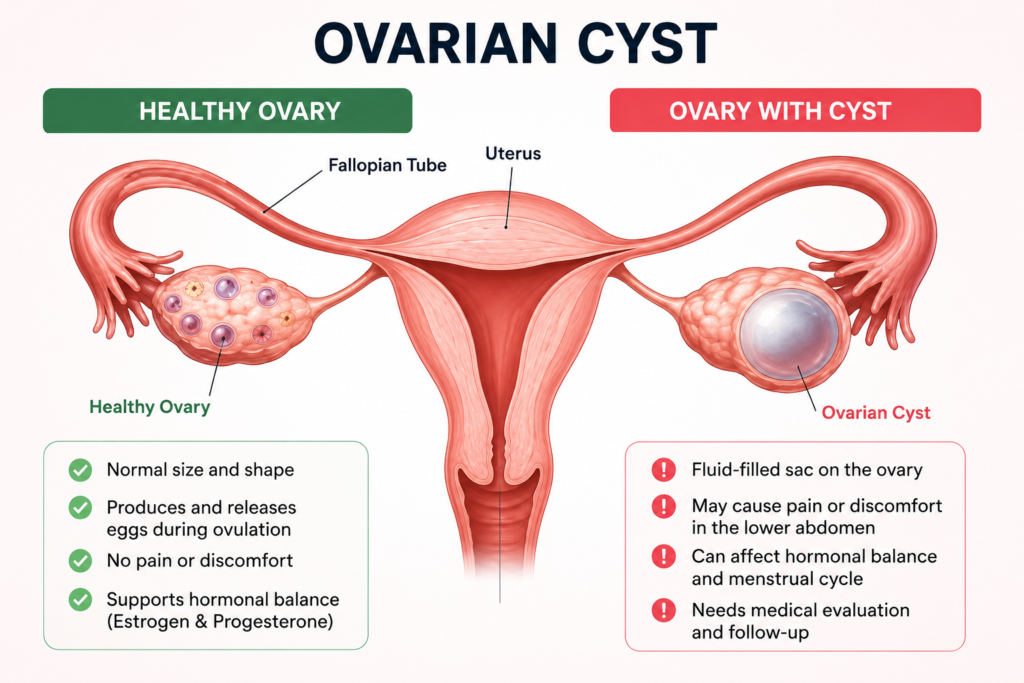
An Ovarian Cyst is a common health condition that affects many women during their reproductive years. In most cases, these cysts are harmless and disappear on their own without causing serious problems. However, some cysts can grow larger, cause discomfort, or lead to complications if left untreated. Understanding the symptoms, diagnosis, and treatment options can help women seek medical care at the right time and protect their reproductive health.
For Indian married couples, awareness about an Ovarian Cyst is especially important because it may influence fertility, pregnancy planning, and overall well-being. Many women ignore mild pelvic pain or irregular periods, assuming they are normal. Early recognition of warning signs and timely medical consultation can prevent complications and improve treatment outcomes. This guide explains everything you need to know in simple and easy-to-understand language.
Table of Contents
What Is an Ovarian Cyst?
An Ovarian Cyst is a fluid-filled sac that develops on or inside an ovary. Women have two ovaries, one on each side of the uterus, and these organs produce eggs as well as hormones like estrogen and progesterone. During the menstrual cycle, small cyst-like structures naturally form as part of ovulation. Most of these disappear naturally after releasing an egg.
Sometimes, however, a cyst does not disappear or starts growing larger. This condition is known as an Ovarian Cyst. While many cysts remain harmless and symptom-free, others may cause pain, menstrual irregularities, or pressure in the lower abdomen. The size, type, and location of the cyst determine whether treatment is necessary.
Doctors often discover an Ovarian Cyst during a routine pelvic examination or an ultrasound performed for another medical reason. Although hearing the diagnosis can be worrying, it is important to know that the majority of ovarian cysts are non-cancerous and can be managed successfully with proper medical guidance.
Types of Ovarian Cysts
Different types of an Ovarian Cyst develop for different reasons. Knowing the type helps doctors recommend the most suitable treatment.
Functional Ovarian Cysts
Functional cysts are the most common type of Ovarian Cyst. They develop naturally during the menstrual cycle and usually disappear within a few weeks or months without treatment. These cysts rarely affect fertility and often cause no symptoms unless they become unusually large.
Follicular Cysts
A follicular Ovarian Cyst develops when the follicle does not release the egg during ovulation. Instead of breaking open, it continues to grow and fills with fluid. These cysts usually resolve naturally and are considered harmless in most women.
Corpus Luteum Cysts
After ovulation, the follicle transforms into a structure called the corpus luteum. Sometimes it fills with fluid instead of shrinking, resulting in a corpus luteum Ovarian Cyst. These cysts may occasionally cause pelvic pain or delayed periods but often disappear without medical intervention.
Dermoid Cysts
Dermoid cysts are different because they may contain tissues such as hair, skin, or fat. Although usually non-cancerous, they can become large and may require surgical removal if they cause pain or complications.
Endometriomas
Women with endometriosis may develop endometriomas, also called “chocolate cysts.” This type of Ovarian Cyst forms when endometrial tissue grows on the ovaries. These cysts can contribute to chronic pelvic pain and fertility challenges.
Cystadenomas
Cystadenomas develop from the outer surface of the ovary and may contain watery or mucus-like fluid. They can grow quite large, creating pressure on nearby organs and sometimes requiring surgical treatment.
What Causes an Ovarian Cyst?
An Ovarian Cyst can develop due to several natural and medical factors. While some causes are related to normal reproductive processes, others may indicate an underlying health condition.
Normal Ovulation
The most common reason for an Ovarian Cyst is the normal ovulation process. Every month, follicles develop in the ovaries. Occasionally, a follicle continues growing instead of releasing the egg, resulting in a functional cyst.
Hormonal Changes
Hormonal imbalance can increase the likelihood of developing an Ovarian Cyst. Changes in reproductive hormones may interfere with ovulation and encourage cyst formation. Women taking fertility medications may also have a higher chance of developing temporary ovarian cysts.
Endometriosis
Women with endometriosis are more likely to develop a specific type of Ovarian Cyst known as an endometrioma. These cysts occur when tissue similar to the uterine lining attaches to the ovaries and grows over time.
Pregnancy
In some pregnancies, an Ovarian Cyst develops during the early weeks to support hormone production until the placenta takes over. These cysts usually disappear naturally as pregnancy progresses.
Pelvic Infections
Severe pelvic infections can spread to the ovaries and fallopian tubes, increasing the risk of an Ovarian Cyst. Prompt treatment of infections reduces the chance of long-term reproductive complications.
Polycystic Ovary Syndrome (PCOS)
Although PCOS differs from a typical Ovarian Cyst, women with this hormonal disorder develop multiple small follicles that appear as cysts on ultrasound. Proper management of PCOS helps improve hormonal balance and reproductive health.
Early Symptoms and Warning Signs of an Ovarian Cyst
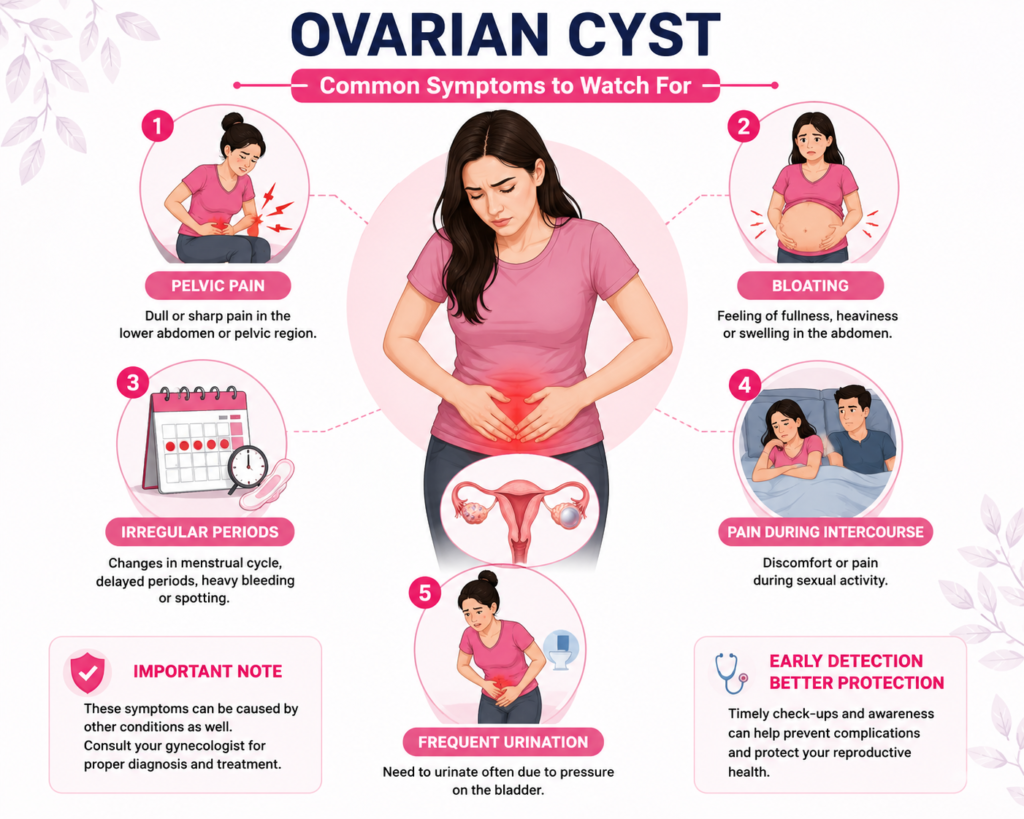
Many women with a Cyst do not experience noticeable symptoms, especially when the cyst is small. However, as it grows or causes complications, several warning signs may appear. Paying attention to these symptoms helps ensure early diagnosis and timely treatment.
Pelvic Pain
Persistent or recurring pelvic pain is one of the most common symptoms of a Cyst. The pain may be dull, sharp, or intermittent and is usually felt on one side of the lower abdomen. Some women notice that the discomfort becomes worse during physical activity or sexual intercourse.
Abdominal Bloating
A growing Ovarian Cyst can create a feeling of heaviness or fullness in the lower abdomen. Many women describe persistent bloating that does not improve with dietary changes. If bloating continues for several weeks, medical evaluation is recommended.
Irregular Menstrual Cycle
Hormonal changes associated with a Cyst may affect the menstrual cycle. Women may experience delayed periods, unusually heavy bleeding, spotting between periods, or changes in cycle length. These symptoms should not be ignored, especially if they continue for multiple cycles.
Pain During Intercourse
Some women experience discomfort or pain during sexual intercourse because of pressure from a Cyst. This symptom may become more noticeable when the cyst increases in size and should be discussed with a gynecologist.
Frequent Urination
A large Cyst may press against the bladder, leading to frequent urination or difficulty completely emptying the bladder. Similar pressure on the bowel can also cause constipation or discomfort during bowel movements.
Lower Back Pain
Pain in the lower back or thighs may occur when a Cyst presses on nearby nerves and tissues. Although this symptom can have many causes, it should be evaluated if it occurs along with pelvic pain or menstrual changes.
How Is an Ovarian Cyst Diagnosed?
Diagnosing begins with understanding the patient’s symptoms and medical history. A gynecologist may ask about menstrual cycles, pelvic pain, pregnancy history, and any family history of ovarian or breast cancer. Early diagnosis helps determine whether the cyst is harmless or requires medical treatment.
Since different types of ovarian cysts require different approaches, doctors often recommend a combination of physical examinations and imaging tests. These evaluations help identify the size, shape, and nature of the cyst while ruling out other reproductive health conditions.
Pelvic Examination
A pelvic examination is usually the first step in diagnosing an Ovarian Cyst. During this examination, the doctor gently checks the ovaries and surrounding reproductive organs for swelling, tenderness, or unusual growth. Although a pelvic exam cannot confirm every cyst, it often provides valuable clues that guide further testing.
Women should not avoid regular gynecological check-ups, even if they feel healthy. Routine pelvic examinations can help detect reproductive health issues early, allowing timely treatment before complications develop.
Ultrasound Scan
An ultrasound is the most common imaging test used to diagnose. It uses sound waves to create detailed images of the ovaries and nearby organs without exposing the patient to radiation. This test helps determine the cyst’s size, location, and whether it is filled with fluid or contains solid components.
Doctors may perform either an abdominal ultrasound or a transvaginal ultrasound, depending on the patient’s condition. The results help distinguish between simple cysts, complex cysts, and other ovarian abnormalities.
Pregnancy Test
For women of reproductive age, a pregnancy test may be recommended during the evaluation. Certain cysts naturally develop during early pregnancy to support hormone production. Confirming pregnancy helps doctors decide the safest monitoring or treatment plan.
This test also helps rule out conditions such as ectopic pregnancy, which may produce symptoms similar to those of an ovarian cyst and require immediate medical attention.
Blood Tests
Blood tests may be advised to evaluate hormone levels or check for infection. In some situations, doctors may recommend the CA-125 blood test, particularly if the cyst appears complex or if there is concern about ovarian cancer.
It is important to understand that a high CA-125 level does not automatically indicate cancer. Several non-cancerous conditions, including endometriosis and pelvic infections, can also increase this marker. Doctors interpret the results along with imaging findings and the patient’s overall health.
CT Scan or MRI
If ultrasound findings are unclear, additional imaging such as a CT scan or MRI may be recommended. These advanced scans provide more detailed information about the Ovarian Cyst, especially when surgery is being considered or when the cyst has unusual features.
Although not required for every patient, these imaging tests help doctors create a more accurate treatment plan while minimizing unnecessary procedures.
Treatment Options for an Ovarian Cyst
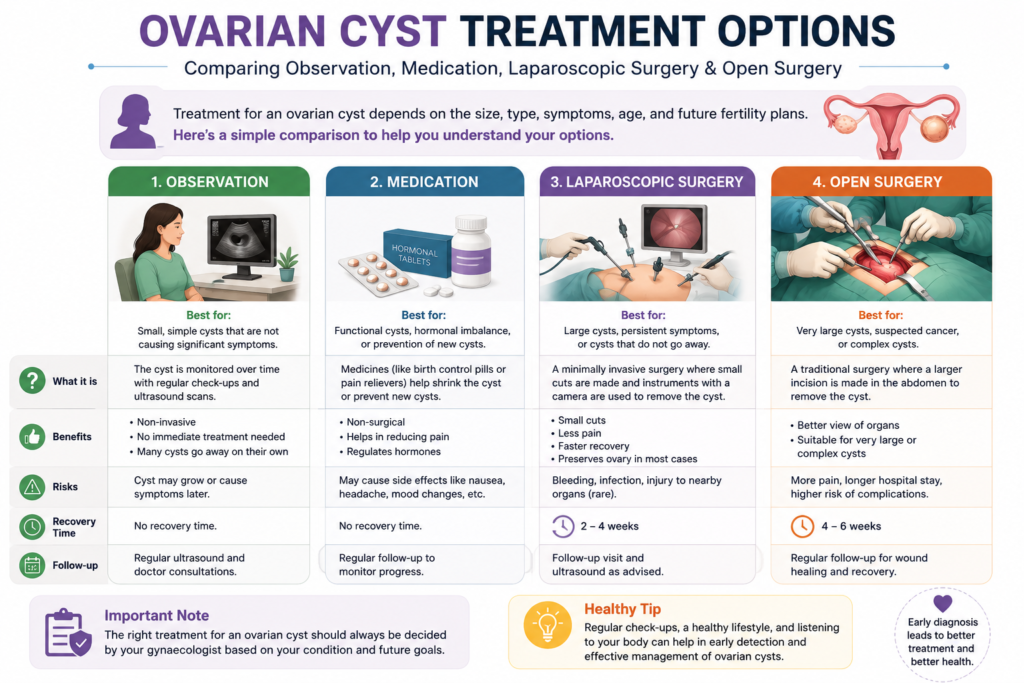
Treatment for an Ovarian Cyst depends on several factors, including the woman’s age, symptoms, cyst size, type, and future pregnancy plans. Many cysts disappear naturally, while others require medication or surgery.
The goal of treatment is to relieve symptoms, prevent complications, and preserve reproductive health whenever possible. Every treatment plan should be individualized under the guidance of a qualified gynecologist.
Watchful Waiting
For small and simple cysts that do not cause symptoms, doctors often recommend watchful waiting. Instead of immediate treatment, the Ovarian Cyst is monitored with follow-up ultrasounds over several weeks or months.
Many functional cysts disappear naturally without any medical intervention. During this period, patients should report any increase in pain, sudden swelling, or unusual bleeding to their healthcare provider.
Medications
Although medicines cannot remove every Ovarian Cyst, they may help prevent new functional cysts from developing. Birth control pills are sometimes prescribed to regulate ovulation and reduce the risk of future cyst formation.
Pain-relieving medications may also be recommended for women experiencing mild to moderate pelvic discomfort. These medicines should always be taken according to medical advice rather than through self-medication.
Laparoscopic Surgery
If an Ovarian Cyst becomes large, causes persistent pain, or does not disappear after observation, laparoscopic surgery may be advised. This minimally invasive procedure uses small incisions and a camera to remove the cyst while preserving healthy ovarian tissue whenever possible.
Because recovery is usually faster than traditional surgery, many women return to normal activities within a few weeks. The exact recovery period depends on the complexity of the procedure and individual health.
Open Surgery
In certain situations, open surgery may be necessary. Doctors may recommend this approach if the Ovarian Cyst is extremely large, appears suspicious, or if cancer cannot be ruled out before surgery.
Open surgery allows the surgeon better access to the reproductive organs while ensuring complete removal of the abnormal tissue. The treatment approach is determined after careful evaluation of imaging results and overall health.
Lifestyle Changes That Support Recovery
While lifestyle changes cannot eliminate an Ovarian Cyst, they can support overall reproductive health and reduce discomfort. Healthy daily habits also improve recovery after treatment and promote hormonal balance.
Women should always combine lifestyle improvements with regular medical follow-up rather than relying on home remedies alone. Professional guidance remains essential for proper management.
Eat a Balanced Diet
A nutritious diet rich in vegetables, fruits, whole grains, lean proteins, and healthy fats supports hormonal health. Reducing processed foods and excessive sugar intake may also contribute to better overall wellness.
Staying hydrated and maintaining a healthy body weight are additional steps that support reproductive health and reduce the risk of hormone-related conditions.
Stay Physically Active
Regular physical activity helps improve blood circulation, manage body weight, and support hormonal balance. Walking, yoga, stretching, and light aerobic exercises are suitable for many women.
However, women with a large or painful Ovarian Cyst should avoid strenuous activities that may increase the risk of cyst rupture or ovarian torsion. Always follow the advice of your healthcare provider regarding exercise.
Manage Stress
Long-term stress can influence hormone regulation and overall health. Relaxation techniques such as meditation, deep breathing exercises, and adequate sleep may help improve emotional well-being during treatment.
Building a healthy routine also encourages better recovery and reduces anxiety associated with medical diagnosis and follow-up care.
Attend Regular Check-Ups
Even after symptoms improve, follow-up appointments remain important. Regular ultrasound examinations allow doctors to monitor the Ovarian Cyst and ensure that no new complications develop.
Women who have experienced ovarian cysts in the past should continue routine gynecological care to maintain long-term reproductive health.
Possible Complications of an Ovarian Cyst
Most cases of an Ovarian Cyst do not lead to serious health problems. However, some cysts can cause complications if they become very large or remain untreated. Understanding these risks encourages timely medical consultation and better health outcomes.
Fortunately, early diagnosis and appropriate treatment significantly reduce the likelihood of severe complications in most women.
Ovarian Torsion
A large Ovarian Cyst may cause the ovary to twist around its supporting tissues, a condition known as ovarian torsion. This interrupts blood supply to the ovary and causes sudden, severe pelvic pain, nausea, and vomiting.
Ovarian torsion is considered a medical emergency. Immediate surgical treatment is often necessary to save the ovary and prevent permanent damage.
Cyst Rupture
Sometimes an Ovarian Cyst may burst unexpectedly. A ruptured cyst can cause sudden sharp pain, internal bleeding, and abdominal tenderness. Small ruptures may heal naturally, while severe bleeding requires urgent medical treatment.
Women experiencing sudden intense pelvic pain, dizziness, or fainting should seek emergency medical care without delay.
Infection
Although uncommon, an infected Ovarian Cyst may develop after pelvic infections. This can result in fever, increasing pelvic pain, and abnormal vaginal discharge. Prompt antibiotic treatment is necessary to prevent the infection from spreading.
Ignoring signs of infection may increase the risk of long-term reproductive complications, making early medical evaluation essential.
Can an Ovarian Cyst Affect Fertility and Pregnancy?
Many married couples worry about whether an Ovarian Cyst will affect their ability to conceive. The reassuring news is that most ovarian cysts do not cause infertility. Functional cysts generally resolve naturally and have little impact on reproductive health.
However, certain types of cysts, particularly endometriomas or cysts associated with severe endometriosis, may reduce fertility by affecting ovarian function. Early diagnosis and specialized treatment improve the chances of successful conception.
Women planning pregnancy should consult a gynecologist if they have persistent pelvic pain, irregular periods, or have been diagnosed with an Ovarian Cyst. Proper monitoring before conception helps ensure a healthier pregnancy journey.
When Should You See a Doctor?
Many women with an Ovarian Cyst do not need emergency treatment, but certain symptoms should never be ignored. Seeking medical advice early allows doctors to diagnose the condition before complications develop. Timely evaluation also provides peace of mind and helps women receive the most appropriate care based on the type and size of the cyst.
Contact a gynecologist if you experience any of the following:
- Persistent pelvic pain lasting for several days
- Irregular or unusually heavy menstrual bleeding
- Pain during sexual intercourse
- Frequent urination caused by pelvic pressure
- Ongoing abdominal bloating or swelling
- Difficulty conceiving despite regular attempts
- Recurrent ovarian cysts on previous scans
Seek immediate emergency medical care if you notice:
- Sudden, severe pelvic or abdominal pain
- Fever along with pelvic pain
- Fainting or dizziness
- Rapid breathing or weakness
- Severe nausea and vomiting with intense pain
These symptoms may indicate a ruptured Ovarian Cyst or ovarian torsion, both of which require urgent medical attention.
Frequently Asked Questions (FAQs)
1. Is an Ovarian Cyst always dangerous?
No. Most cases are harmless and disappear naturally without treatment. However, larger cysts or those causing severe symptoms should be evaluated by a gynecologist to prevent complications.
2. Can an Ovarian Cyst go away without surgery?
Yes. Many functional cysts resolve on their own within a few menstrual cycles. Doctors often recommend observation with repeat ultrasounds before considering surgery, provided there are no warning signs.
3. Does an Ovarian Cyst affect pregnancy?
Most women with an Ovarian Cyst have healthy pregnancies. Some cysts even develop naturally during early pregnancy and disappear later. However, larger or complex cysts require careful monitoring by a healthcare provider.
4. Can an Ovarian Cyst cause infertility?
Most ovarian cysts do not affect fertility. Certain conditions, such as endometriosis-related cysts, may reduce fertility in some women. Early diagnosis and appropriate treatment improve the chances of conception.
5. What size of an Ovarian Cyst requires surgery?
The need for surgery depends on more than size alone. Doctors also consider symptoms, growth rate, ultrasound findings, and the patient’s age. A gynecologist will recommend the safest treatment based on the complete clinical picture.
6. Are ovarian cysts cancerous?
The majority of an Ovarian Cyst cases are non-cancerous. The risk of ovarian cancer is generally higher after menopause or when imaging shows suspicious features. Additional investigations help determine the exact diagnosis.
7. Can exercise make an Ovarian Cyst worse?
Light exercise is usually safe for most women. However, those with a large or painful Ovarian Cyst should avoid high-impact activities until their doctor advises it is safe, as vigorous movement may increase the risk of complications.
8. When should I worry about an Ovarian Cyst?
You should seek immediate medical attention if you experience sudden severe pelvic pain, dizziness, fainting, fever, or vomiting. These symptoms may indicate a ruptured Ovarian Cyst or ovarian torsion and require emergency care.
Conclusion
An Ovarian Cyst is a common gynecological condition that affects women of different age groups, especially during their reproductive years. While most cysts are harmless and disappear naturally, some require careful monitoring or medical treatment. Understanding the symptoms, causes, diagnosis, and available treatment options helps women make informed decisions about their reproductive health.
For Indian married couples, awareness is especially valuable when planning a family. Ignoring pelvic pain, irregular menstrual cycles, or persistent bloating can delay diagnosis and increase the risk of complications. Consulting a qualified gynecologist at the right time improves treatment outcomes and helps protect fertility whenever possible.
The good news is that advances in medical diagnosis and minimally invasive treatment have made managing an Ovarian Cyst safer and more effective than ever before. With regular health check-ups, a balanced lifestyle, and timely medical care, most women recover well and continue to lead healthy, active lives.
Contact Information

Dr. Jasleen Kaur Malhotra
Gynaecologist, Obstetrician & Infertility Specialist
📍 Address: Clinic No. 56A, Behind Main Market, Sector 6, Dwarka, New Delhi – 110075
📞 Phone: +91-99105-52246
🌐 Website: gynaefemmewellnessdwarka.com