
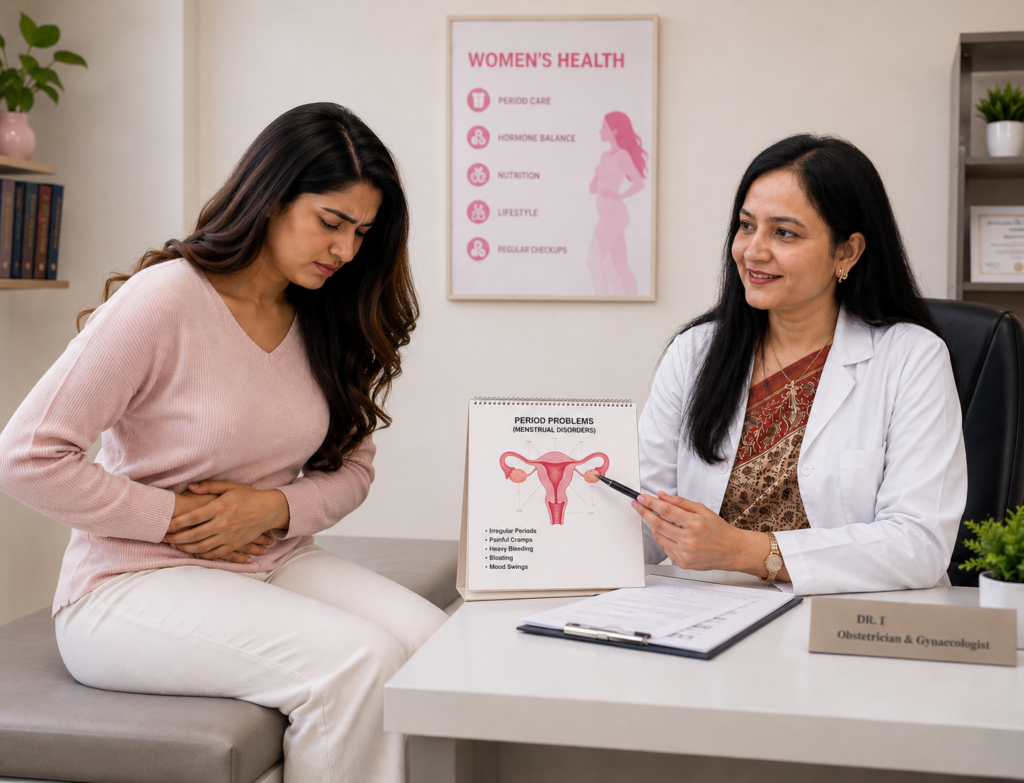
The menstrual cycle is an important indicator of a woman’s overall reproductive and hormonal health. While many women experience a regular menstrual cycle every 21 to 35 days, others may notice that their periods arrive earlier, later, or sometimes not at all. If you’ve ever wondered, “Why Are My Periods Irregular?“, you’re not alone. Irregular periods are one of the most common gynecological concerns affecting teenagers, women of reproductive age, and even those approaching menopause.
Many women wonder, Why Are My Periods Irregular?, when they notice changes in their menstrual cycle. Several factors can affect menstrual regularity, including hormonal fluctuations, stress, poor nutrition, excessive exercise, lifestyle changes, pregnancy, medications, thyroid disorders, and conditions such as PCOS. While occasional variations in cycle length or flow are often normal, persistent or recurring irregular periods may indicate an underlying health condition that requires medical attention. If you frequently ask yourself, Why Are My Periods Irregular?, tracking your menstrual cycle and consulting a healthcare professional can help identify the cause and ensure timely diagnosis and appropriate treatment for better reproductive health.
Understanding Why Are My Periods Irregular? is the first step toward identifying the cause and receiving appropriate treatment if necessary. Tracking your menstrual cycle, recognizing changes in bleeding patterns, and paying attention to associated symptoms can help both you and your healthcare provider determine whether further evaluation is needed.
Irregular periods may affect fertility, emotional well-being, daily activities, and overall quality of life. Fortunately, many causes of irregular menstruation can be successfully managed through lifestyle modifications, medical treatment, or hormonal therapy depending on the underlying cause.
This comprehensive guide explains Why Are My Periods Irregular?, how the menstrual cycle works, common causes of irregular menstruation, warning signs to watch for, and when to seek professional medical advice.
Table of Contents
What Is an Irregular Period?
A menstrual cycle is considered irregular when there are significant changes in:
- Cycle length
- Bleeding duration
- Flow intensity
- Timing between periods
Most healthy menstrual cycles occur every 21 to 35 days.
An irregular period may include:
- Periods arriving too early
- Periods arriving too late
- Missed periods
- Very heavy bleeding
- Very light bleeding
- Spotting between periods
- Unpredictable menstrual cycles
If you frequently ask yourself, Why Are My Periods Irregular?, understanding what qualifies as an irregular cycle is an important first step.
How the Menstrual Cycle Works
The menstrual cycle is controlled by a complex interaction of hormones produced by the brain and ovaries.
The four main phases include:
1. Menstrual Phase
The menstrual phase begins on the first day of bleeding.
During this stage:
- The uterine lining sheds.
- Menstrual bleeding occurs.
- Hormone levels are relatively low.
2. Follicular Phase
The brain releases Follicle Stimulating Hormone (FSH), which stimulates ovarian follicles to mature.
During this phase:
- Eggs begin developing.
- Estrogen levels gradually increase.
- The uterine lining starts rebuilding.
3. Ovulation
Around the middle of the menstrual cycle:
- A mature egg is released.
- Luteinizing Hormone (LH) triggers ovulation.
- Fertility is highest.
4. Luteal Phase
After ovulation:
- Progesterone levels increase.
- The uterus prepares for possible pregnancy.
- If pregnancy does not occur, hormone levels decrease and menstruation begins.
Any disruption in these hormonal changes may contribute to irregular periods.
Understanding the menstrual cycle helps answer the common question: Why Are My Periods Irregular?
What Causes Irregular Periods?
Many different factors can influence menstrual regularity.
Some causes are temporary, while others require medical attention.
Hormonal Imbalances
Hormones regulate every stage of the menstrual cycle.
Even small hormonal changes may affect:
- Ovulation
- Cycle length
- Bleeding pattern
Hormonal imbalance is one of the most common reasons women wonder Why Are My Periods Irregular?
Stress
Physical and emotional stress can significantly influence hormone production.
Stress affects the hypothalamus, an area of the brain responsible for regulating reproductive hormones.
Common sources of stress include:
- Work pressure
- Academic stress
- Financial concerns
- Relationship problems
- Major life changes
Reducing stress often helps restore menstrual regularity.
Excessive Exercise
Regular physical activity supports good health, but excessive exercise may disrupt hormonal balance and affect the menstrual cycle. If you’re wondering, Why Are My Periods Irregular?, intense physical training could be one possible reason.
Women participating in:
- Competitive athletics
- Marathon training
- Intensive fitness programs
may experience:
- Missed periods
- Delayed ovulation
- Irregular menstrual cycles
If you frequently ask Why Are My Periods Irregular?, evaluating your exercise routine, maintaining proper nutrition, and following a balanced training schedule can help support hormonal balance and reproductive health.
Sudden Weight Changes
Body weight plays a significant role in hormone production and reproductive health. If you’re asking, Why Are My Periods Irregular?, sudden changes in body weight may be an important factor. Both rapid weight loss and significant weight gain can disrupt ovulation and lead to irregular menstrual cycles.
Examples include:
- Strict dieting
- Eating disorders
- Obesity
- Rapid muscle gain
Maintaining a healthy body weight through balanced nutrition and regular physical activity helps support hormonal balance and regular menstrual cycles. If you continue to wonder Why Are My Periods Irregular?, consult a healthcare professional to identify the underlying cause and receive appropriate guidance.
Poor Nutrition
The body requires adequate nutrients to produce reproductive hormones.
Nutritional deficiencies may contribute to menstrual irregularities.
Important nutrients include:
- Iron
- Vitamin D
- Calcium
- Vitamin B12
- Healthy fats
- Protein
A balanced diet supports healthy hormone production.
Sleep Problems
Poor sleep affects hormone regulation throughout the body.
Sleep deprivation may contribute to:
- Increased stress hormones
- Hormonal imbalance
- Menstrual irregularities
Good sleep hygiene supports reproductive health.
Traveling and Schedule Changes
Frequent travel, especially across different time zones, can temporarily disrupt your body’s internal clock and affect hormone regulation. If you’re wondering, Why Are My Periods Irregular?, changes in your daily routine may be one of the reasons. Night-shift work, irregular sleep schedules, and frequent travel can interfere with the hormones that regulate the menstrual cycle, sometimes leading to delayed, missed, or irregular periods. If you continue asking Why Are My Periods Irregular?, maintaining a consistent sleep schedule and healthy lifestyle may help support hormonal balance and improve menstrual regularity.
Medications
Certain medications can influence hormone levels and affect the regularity of your menstrual cycle. If you’re asking, Why Are My Periods Irregular?, a recently started medication could be one possible cause. Some medicines may lead to lighter periods, heavier bleeding, delayed cycles, or even missed periods.
Examples include:
- Hormonal contraceptives
- Steroids
- Antidepressants
- Chemotherapy medications
- Thyroid medications
If you notice menstrual changes after starting a new medication and continue wondering Why Are My Periods Irregular?, consult your healthcare provider. Never stop or change prescribed medications without professional medical advice.
Puberty
During puberty, it is common for teenagers to experience irregular menstrual cycles in the first few years after their first period. If you’re wondering, Why Are My Periods Irregular?, developing reproductive hormones during adolescence are often the reason. Since hormonal regulation is still maturing, ovulation may not occur regularly, leading to missed or unpredictable periods. In most cases, menstrual cycles become more regular as hormone levels stabilize over time. However, if irregular periods continue for several years or are accompanied by severe pain or heavy bleeding, consult a healthcare professional to determine Why Are My Periods Irregular? and whether further evaluation is needed.
Breastfeeding
Breastfeeding can naturally affect the menstrual cycle because the hormone prolactin, which supports milk production, may temporarily suppress ovulation. If you’re wondering, Why Are My Periods Irregular?, breastfeeding could be one of the reasons, especially during the first few months after childbirth. Many women experience delayed, lighter, or irregular periods while breastfeeding. As breastfeeding becomes less frequent or stops altogether, hormone levels gradually return to normal, and menstrual cycles usually become more regular. If you continue asking Why Are My Periods Irregular? after breastfeeding has significantly decreased, consult your healthcare provider for further evaluation.
Emotional Health and Menstrual Cycles
Mental health and reproductive health are closely connected.
Conditions such as:
- Anxiety
- Depression
- Chronic stress
may influence hormone production and menstrual regularity.
Managing emotional well-being is an important part of overall reproductive health.
Keeping Track of Your Menstrual Cycle
Tracking menstrual cycles helps identify changes that may require medical evaluation.
Consider recording:
- First day of each period
- Length of bleeding
- Flow intensity
- Symptoms
- Pain levels
- Mood changes
- Spotting
- Missed periods
Many smartphone apps make menstrual tracking simple and convenient.
Tracking provides valuable information when discussing Why Are My Periods Irregular? with a healthcare professional.
Why Early Evaluation Matters
Occasional irregular periods are often harmless.
However, persistent menstrual irregularities should not be ignored because they may indicate underlying medical conditions.
Early evaluation helps:
- Identify hormonal disorders
- Detect reproductive health problems
- Improve fertility planning
- Prevent complications
- Provide timely treatment
Seeking professional advice when needed supports long-term reproductive health.
Polycystic Ovary Syndrome (PCOS)

One of the most common medical reasons women ask Why Are My Periods Irregular? is Polycystic Ovary Syndrome. PCOS is a hormonal condition that affects ovulation and can lead to irregular or missed periods.
Women with PCOS may not ovulate regularly, causing unpredictable menstrual cycles.
Common Symptoms of PCOS
- Irregular or absent periods
- Excess facial or body hair
- Acne
- Weight gain
- Difficulty losing weight
- Thinning hair
- Fertility challenges
Early diagnosis and appropriate treatment can help manage symptoms and improve menstrual regularity.
Thyroid Disorders
The thyroid gland produces hormones that regulate metabolism and influence many body functions, including the menstrual cycle.
Both an underactive thyroid and an overactive thyroid may cause menstrual irregularities.
Hypothyroidism
An underactive thyroid may lead to:
- Heavy periods
- Delayed periods
- Fatigue
- Weight gain
- Dry skin
- Constipation
Hyperthyroidism
An overactive thyroid may cause:
- Lighter periods
- Missed periods
- Weight loss
- Rapid heartbeat
- Anxiety
- Excessive sweating
When evaluating Why Are My Periods Irregular?, healthcare providers often recommend thyroid function tests.
Pregnancy
Pregnancy is one of the first possibilities to consider when a period is missed.
If you are sexually active and your period is delayed, taking a pregnancy test is an important first step.
Early pregnancy symptoms may include:
- Missed period
- Breast tenderness
- Fatigue
- Nausea
- Frequent urination
- Mild cramping
If pregnancy is confirmed, schedule an appointment with your healthcare provider for prenatal care.
Perimenopause
Women approaching menopause often experience changes in their menstrual cycle.
Perimenopause typically begins several years before menopause and is characterized by fluctuating hormone levels.
Symptoms may include:
- Irregular periods
- Hot flashes
- Night sweats
- Mood changes
- Sleep disturbances
- Vaginal dryness
These hormonal changes commonly explain Why Are My Periods Irregular? during the late reproductive years.
Certain Medical Conditions
Several health conditions may contribute to irregular menstruation.
Examples include:
- Diabetes
- Chronic kidney disease
- Liver disease
- Eating disorders
- Adrenal gland disorders
- Bleeding disorders
Proper diagnosis is important because treatment depends on the underlying condition.
Birth Control and Hormonal Medications
Hormonal contraceptives influence the menstrual cycle.
Some women experience:
- Lighter periods
- Missed periods
- Spotting between periods
- Delayed return of regular cycles after stopping contraception
These changes are often temporary but should be discussed with a healthcare provider if they become concerning.
How Doctors Diagnose Irregular Periods
If menstrual irregularities persist, a healthcare professional will perform a detailed evaluation.
This usually begins with a medical history and physical examination.
Your doctor may ask about:
- Menstrual cycle history
- Pregnancy history
- Medications
- Weight changes
- Lifestyle habits
- Family history
- Current symptoms
Answering these questions honestly helps identify the possible cause of irregular periods.
Diagnostic Tests
Several investigations may be recommended depending on individual symptoms.
Blood Tests
Blood tests help evaluate hormone levels and identify possible medical conditions.
These may include:
- Thyroid hormone tests
- Reproductive hormone levels
- Blood sugar tests
- Iron levels
- Pregnancy test
Pelvic Ultrasound
An ultrasound provides images of the uterus and ovaries.
It helps detect:
- Ovarian cysts
- PCOS
- Fibroids
- Structural abnormalities
Additional Investigations
Depending on symptoms, doctors may recommend:
- Pap smear
- Endometrial evaluation
- MRI (in specific situations)
- Additional hormone testing
These investigations help answer the question Why Are My Periods Irregular? more accurately.
Treatment Options
Treatment depends entirely on the underlying cause.
There is no single treatment suitable for every woman.
Lifestyle Changes
Healthy lifestyle habits can improve menstrual regularity in many cases.
Doctors may recommend:
- Balanced nutrition
- Regular exercise
- Healthy body weight
- Stress reduction
- Adequate sleep
Lifestyle improvement often supports better hormonal balance.
Hormonal Therapy
Hormonal medications may be prescribed to regulate menstrual cycles.
Depending on individual needs, treatment may include:
- Hormonal contraceptives
- Progesterone therapy
- Fertility medications
- Hormone replacement therapy (for selected women)
Treatment decisions should always be made by a qualified healthcare professional.
Treating Underlying Medical Conditions
When irregular periods are caused by another health condition, treating that condition often improves menstrual regularity.
Examples include:
- Thyroid treatment
- PCOS management
- Diabetes control
- Nutritional therapy
- Mental health support
Addressing the underlying cause is often the most effective solution.
Can Irregular Periods Affect Fertility?
Irregular periods sometimes indicate irregular ovulation.
Because ovulation is necessary for pregnancy, some women with irregular menstrual cycles may experience difficulty conceiving.
However, many women with irregular periods can still become pregnant with appropriate medical care and fertility support if needed.
If pregnancy is planned and menstrual cycles remain consistently irregular, discussing concerns with a healthcare provider is recommended.
Self-Care Tips for Better Menstrual Health
Maintaining overall health supports reproductive well-being.
Helpful habits include:
- Eat a balanced diet.
- Stay physically active.
- Maintain a healthy weight.
- Sleep 7–9 hours each night.
- Stay hydrated.
- Manage stress.
- Avoid smoking.
- Limit excessive alcohol consumption.
- Track your menstrual cycle.
These habits may improve overall hormonal health and reduce factors contributing to Why Are My Periods Irregular?
When Should You See a Doctor?
Occasional changes in the menstrual cycle are common, but medical evaluation is recommended if you experience:
- Periods occurring more frequently than every 21 days
- Periods occurring less frequently than every 35 days
- Missed periods for three months or longer (when not pregnant)
- Very heavy bleeding
- Bleeding lasting longer than seven days
- Severe pelvic pain
- Bleeding between periods
- Sudden changes in menstrual patterns
Early medical evaluation helps identify potential health concerns and allows timely treatment.
Importance of Early Diagnosis
Ignoring persistent menstrual irregularities may delay treatment for underlying conditions.
Early diagnosis offers several benefits:
- Improved reproductive health
- Better symptom management
- Earlier treatment
- Reduced complications
- Improved fertility planning
- Greater peace of mind
If you frequently wonder Why Are My Periods Irregular?, seeking professional medical advice is the best way to receive an accurate diagnosis and personalized care.
Contact Information

Dr. Jasleen Kaur Malhotra
Gynaecologist, Obstetrician & Infertility Specialist
📍 Address: Clinic No. 56A, Behind Main Market, Sector 6, Dwarka, New Delhi – 110075
📞 Phone: +91-99105-52246
🌐 Website: gynaefemmewellnessdwarka.com